Your Cart is Empty

Is silver ethical?
Not really. At least, not here in Indonesia. Unlike our fully traceable, mercury free gold, silver doesn’t have a supply chain that lets us follow it from mine to maker. That’s why, instead of using newly mined silver, we choose recycled silver.
It’s not perfect, but it’s the next best thing. Every recycled silver ring, necklace, earring, bracelet or chain keeps silver in circulation and out of landfills.
When we say recycled silver, we mean silver that’s been melted down and refined from old jewelry, electronics, old silverware, x-rays and other medical waste. The result? 100% recycled sterling silver, the same quality as newly mined silver.
The difference between recycled silver and newly mined silver lies in their origin: whether the silver came from old sources (like jewelry or electronics) or straight from the mine.
Sterling silver can be made with either recycled or newly mined silver. Same goes for fine silver.
Recycled silver can be either sterling or fine silver. It depends on how the silversmith decides to mix the metals for the final jewelry.
So when you see “recycled sterling silver”, it means the 92.5% silver portion came from recycled sources, like old jewelry, silverware, electronic or medical waste, instead of being freshly mined.
No purity is lost in the process. The silver from your grandmother’s necklace can be refined, alloyed and reborn as a recycled silver chain or ring today. Chemically, it’s identical to newly mined silver.
When you choose recycled sterling silver, you’re getting the same quality and durability as new silver, with a lower environmental impact.
Sterling silver and fine silver are about composition: how much pure silver is in the mix, and what alloys are added.
Sterling silver is 92.5% silver and 7.5% other metals, usually copper. The copper makes it harder and more durable. That’s why sterling silver is the global standard for silver jewelry, and why you’ll see “925” stamped on most silver rings, earrings, bracelets and necklaces.
Fine silver is 99.9% pure silver. It’s soft and bends easily, so it’s not ideal for rings, chains, gemstone jewelry or jewelry you’ll wear every day.
Recycled silver vs sterling silver vs fine silver
Yes. All silver tarnishes, whether recycled or freshly mined. Tarnish happens when the metal reacts with air and forms sulfides. A quick polish will bring the shine back.
So when you wear recycled silver earrings or a recycled silver bracelet, you’re not trading durability for sustainability. Recycled sterling silver shines just as brightly as new silver.
Recycled sterling silver doesn’t tarnish any faster or slower than newly mined sterling silver. The alloy is identical, so the care is the same. Regular wear, gentle cleaning, and proper storage will keep your recycled silver jewelry looking radiant.
What does make a difference in how fast your silver tarnishes is the alloy of your silver jewelry:
Silver is recovered from discarded sources: old jewelry, silverware, coins, medical waste, industrial scraps and electronic devices. It’s melted down, purified and turned back into pure silver, ready for new designs.
Here’s what happens step by step:
Now let’s get into the numbers.
That’s an 87% drop in emissions.
Take a single recycled silver ring, weighing 1.2 grams:
Multiply that across our entire collection, and the impact adds up. In 2024, we purchased 3,720 grams of recycled silver, saving an estimated 357 kg CO2e from being released into the atmosphere.
That’s like keeping a car off the road for more than 1,400 kilometers.
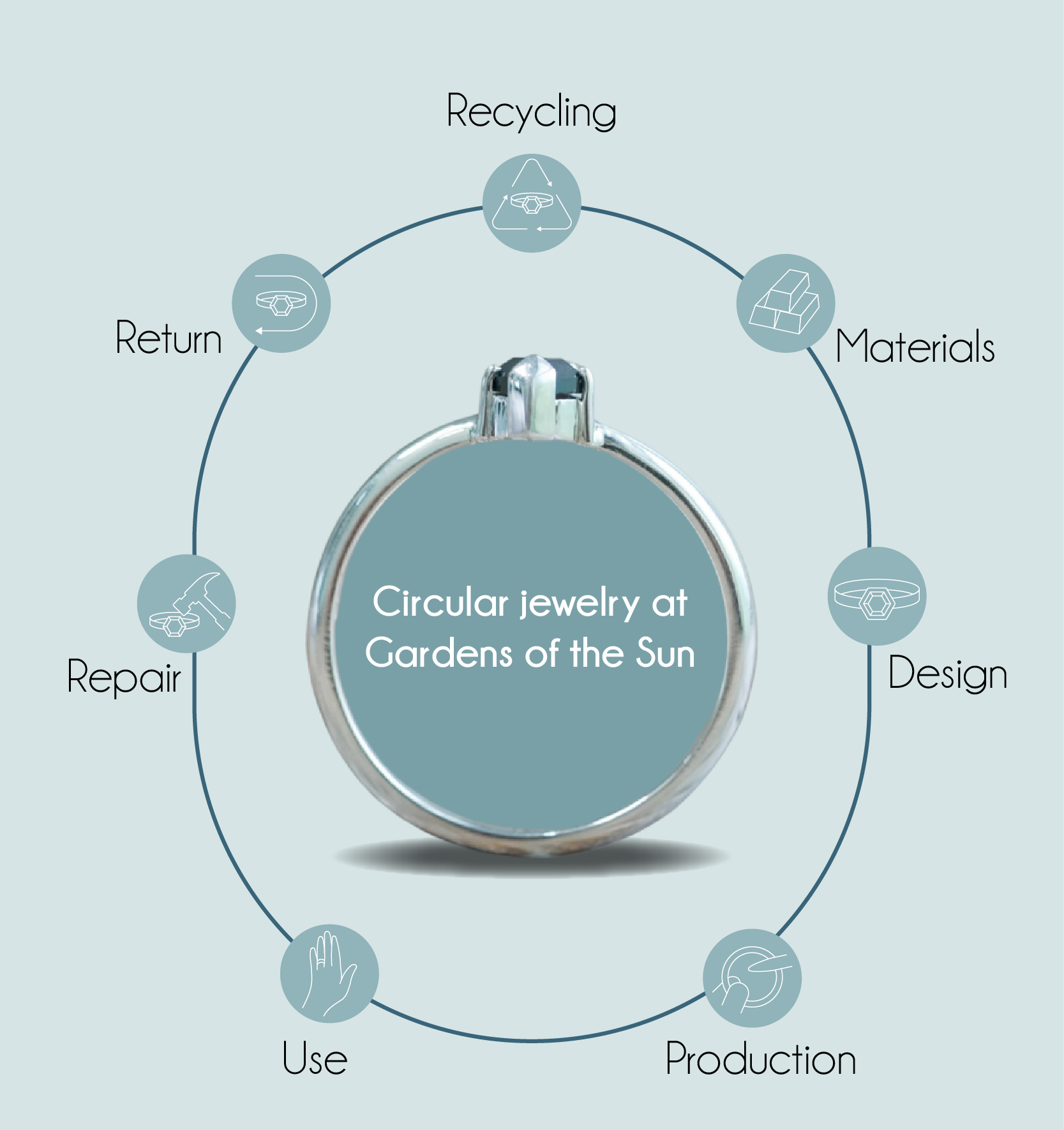
Recycling silver is part of a bigger picture: the circular economy. Instead of digging up new silver and leaving behind poisoned soil, polluted rivers, and empty landscapes, the circular economy keeps what already exists in use.
That means:
When silver is recycled, product life cycles are extended many times over. This is why we encourage you to bring your old silver jewelry and silverware to our showroom. We’ll recycle it for you and give you store credit in return. Your forgotten necklace or dented spoon can become part of a new piece of jewelry.
Mining silver comes with heavy costs: erosion, water contamination, toxic chemical use, biodiversity loss and greenhouse gas emissions. To make it worse, most silver isn’t even mined on purpose. Over 70% of global silver supply comes as a byproduct of mining other metals.
Because silver is usually treated as “extra”, there’s little incentive to create ethical mining systems the way there are for gold. That makes silver tricky and expensive to source responsibly.
We tried. We even asked our gold miners if they could mine silver for us. But they found only trace amounts, not enough to separate or purify sustainably. Financially and practically, it didn’t weigh up against silver’s lower price.
That’s why recycled sterling silver became our path forward.
We just can't afford to mine silver ethically. Actually, very few companies can.
We spoke to Dr. Peter Oakley from the Royal College of Art in London about what makes silver traceability such a nightmare. According to him, it comes down to three things:
Silver is a byproduct
Silver's market price is relatively low
Most silver goes into industrial use, not jewelry
And that checks out.
Gold is mined deliberately. Silver? It just… shows up. It’s pulled up alongside other metals like lead, zinc, copper or gold, which means it rarely gets its own supply chain.
Source: Silver Institute 2018
Even when silver is the focus, it’s no walk in the park. Primary silver mines are producing lower yields. It's just as expensive to extract as gold, but the value is much lower.
In 2017, only 28% of the global silver supply came from dedicated silver mines. The rest was still just a bonus from mining other metals.
Ethical silver isn’t impossible. But it is incredibly rare, expensive, and not available to us in Indonesia yet.
Before we landed on recycled silver, we tried everything else.
The Fairtrade and Fairmined gold systems don’t specifically certify silver, but do offer the silver and platinum byproducts from their certified gold mines. That makes this silver ethical by proxy. There are a number of authorized suppliers of Fairmined and Fairtrade in North America and Europe, but not in Indonesia.
Next stop: our Borneo gold miners. We asked if they could source silver for us too.
They found some, but only in trace amounts, and mixed in with the gold. One recent batch of gold flakes they sent us contained just 11% silver.
We talked to researchers at the Metallurgy Department of Institut Teknologi Bandung and Indonesia’s Research Centre for Mineral and Coal Technology Development. They confirmed what we feared: Yes, safer silver purification methods exist, but the silver output is too low. The process is complicated, requires sophisticated tools and chemicals, and just isn’t viable for small scale artisanal mines in Indonesia.
In short: the environmental benefit doesn’t outweigh the cost, financially or practically.
So we made peace with that fact. And turned to the next best thing.
In 2020, we began sourcing recycled silver from Umicore, a trusted global refiner and a leader in responsible recycling. They’re Chain-of-Custody certified by the Responsible Jewellery Council and listed as a Conflict-Free Smelter by the Responsible Minerals Initiative.
At the time, this felt like the best option available. But eventually, importing recycled silver started to feel... counterintuitive.
The paperwork, delays and changing import regulations were one thing. But flying it all into Indonesia? That was adding emissions on top of the very emissions we were trying to avoid.
So we made the switch. Today, our silver comes from a local Indonesian refiner who recycles post-consumer silver from sources like old jewelry, electronics, silverware and even medical waste.
Every recycled silver necklace, bracelet, ring or chain you buy from us now uses this locally recycled silver. It isn’t a perfect solution, but it’s the most sustainable option available to us today. And it’s one we’re proud to share with you.
You don’t need to let broken chains or forgotten silverware gather dust. Bring your old silver to our showroom so we’ll recycle it for you, and give you shop credit in return.
That’s the circular economy in action. Instead of wasting limited raw materials, we keep them in use for as long as possible. Repair, reuse, recycle. Each time silver is recycled, its life cycle is extended.
It’s a small step that makes a big difference, and we invite you to be part of it.
Bring in your old silver jewelry or silverware today and trade it for store credit toward something new.
Recycled silver isn’t the perfect solution. It doesn’t stop new silver from being mined. But it does cut emissions, reduce waste and keep the circular economy moving.
It’s one of those small, imperfect steps that adds up when you keep going. Just like our mercury free gold journey, this is the silver chapter.
So when you see “recycled sterling silver” on our ethical jewelry, know this: it’s jewelry made from what already exists. It’s jewelry with a story. And it’s jewelry that saves the earth a breath of fresh air.
Recycled sterling silver is silver that’s been melted down, purified, and alloyed again into 92.5% pure silver. It’s chemically identical to newly mined sterling silver.
Yes. All sterling silver tarnishes, recycled or not. A quick polish brings it back to its shine.
Absolutely. No purity is lost in the recycling process. It’s just as durable and valuable as newly mined silver. But this is more ethical silver.
Yes, for the planet. Recycled silver creates 87% fewer emissions and avoids the environmental destruction of mining.
Not really, because most silver comes as a byproduct of mining other metals, which tends to be destructive and lacks traceability. Recycled silver is currently the most sustainable choice.
Yes. Silver can be recycled endlessly without losing quality. That said, most silver jewelry isn’t made from pure silver. It’s usually an alloy, like sterling silver, which is 92.5% silver and 7.5% other metals, typically copper.
While the silver portion in our jewelry is fully recycled, we haven’t yet found a reliable source for recycled copper. That means our recycled sterling silver jewelry still contains some newly mined metals.
Bring your old silver jewelry or silverware to our showroom. We’ll recycle it, give you store credit, and turn it into new jewelry.
Caring for recycled silver is just like caring for any sterling silver jewelry, because it is sterling silver. The fact that it’s recycled doesn’t change its chemistry, durability, or shine.
Here’s how to keep it looking its best:


