Your Cart is Empty

Turquoise is an open book.
A living truth.
She’s a sage learner who traversed through thousands of lives, living and dwelling in each of their truths.
She makes words her home and revels in wisdom learned and shared.
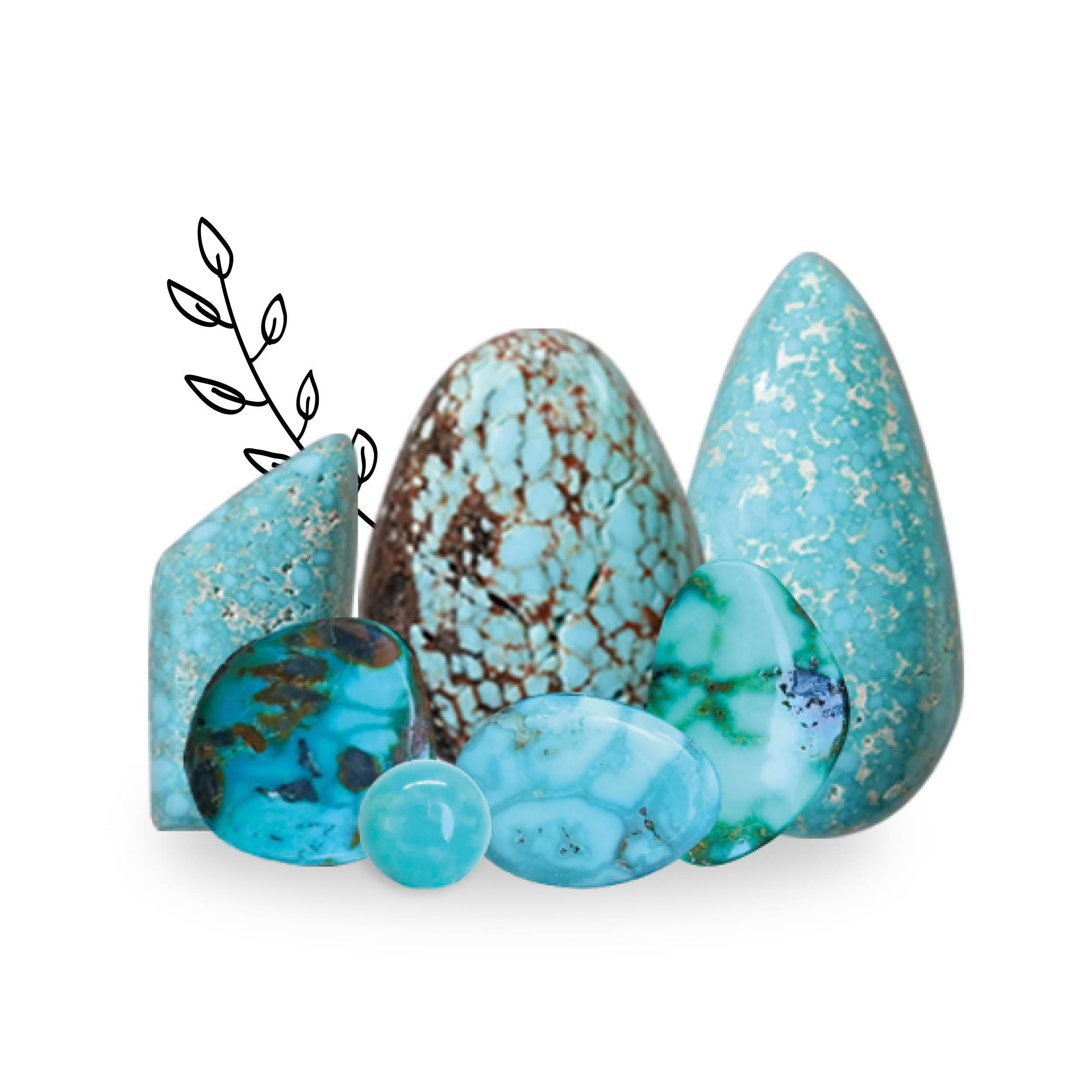
Turquoise is a chip off the old block (of sky). A talisman for warriors, shamans and femme fatales.
Are you a shaman on the dance floor, a warrior at work or a your friendly neighborhood femme fatale? Then this December birthstone been especially plucked from the heavens just for you. An ancient stone that has kept humankind in balance for thousands of years, turquoise is one of December’s birthstones and a calming force of nature.
The French pierre turquoise, meaning ‘Turkish stone’, because merchants often found the stone in Turkish bazaars
She’s an old rolling stone, been around the block and back. Turquoise’s fame goes back, like, way back; she’s a traveling beauty. From Ancient Egypt, China, and Persia to the markets of Venice and the tombs of the Aztecs. Prehistoric Indian priests used to wear it in ceremonies when calling on the great spirit of the sky.
She’s been around, but she’s not worn down. These experiences have created calcified layers on her rich history. She's no one hit wonder, rather, she’s still the world’s biggest pop star.
Why’s that? Well, turquoise carries humankind’s secret recipe to success: balance. She’s the Goldilocks of the gang of greats, and she holds it down so that each aspect of your life is tight as hell. Work. Play. Love. Head. Heart. Hand. They all get their fair share of energy, because that’s how turquoise rolls.
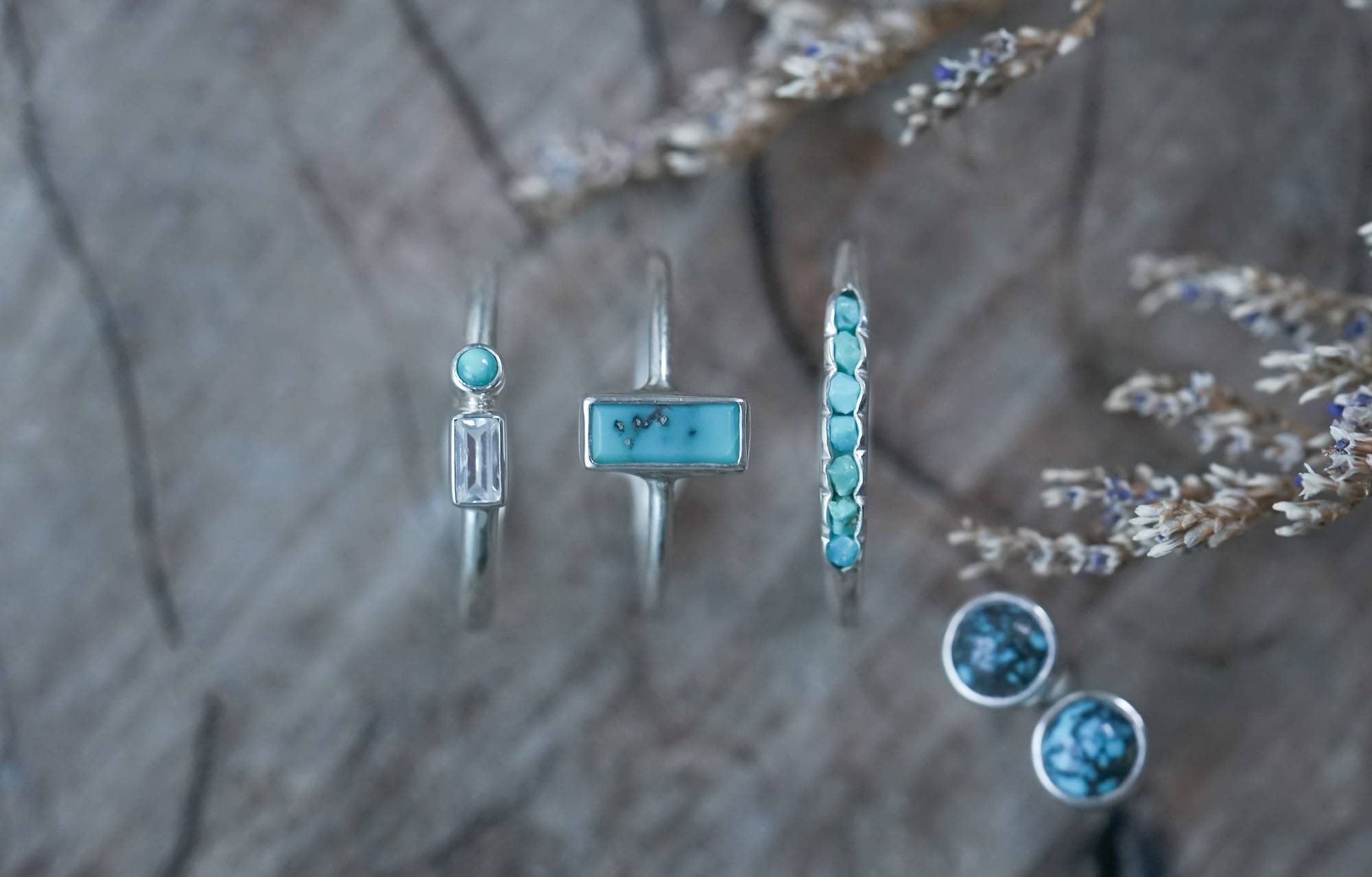
Turquoise fortifies as it calms. She is, after all, a stone marrying water with heat, without ever reaching the boiling point. It’s like aloe vera for over-fried hair. Hence, it builds up strength and smacks down stress, making you into a super human being.
When you can be truly human, you can be truly you. That’s the best kind of freedom there is.
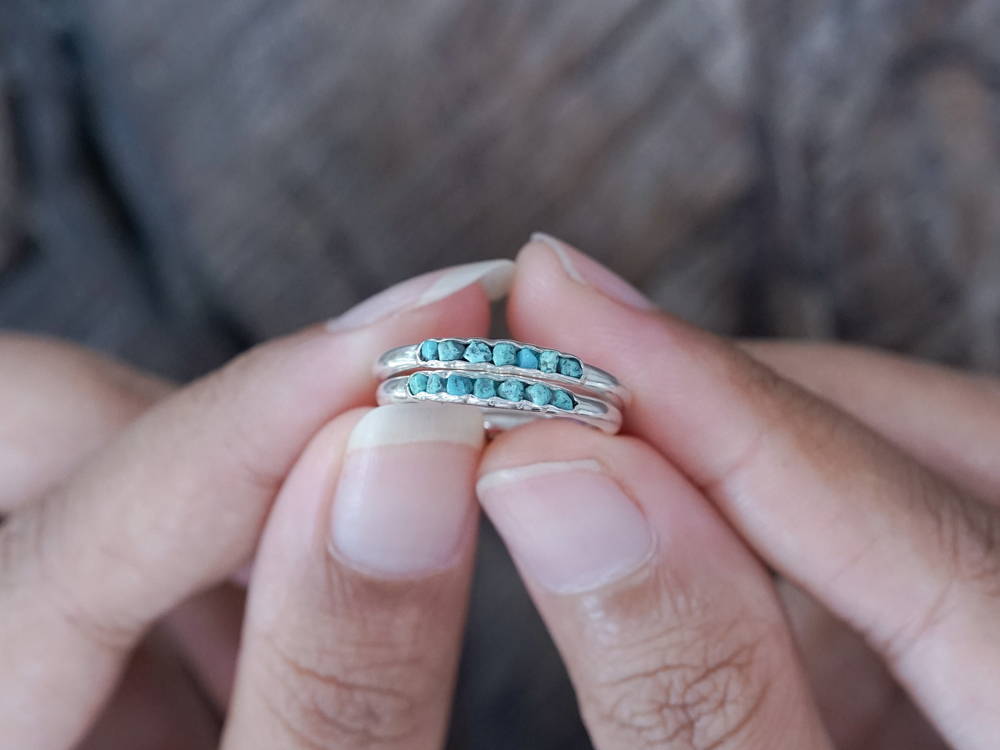
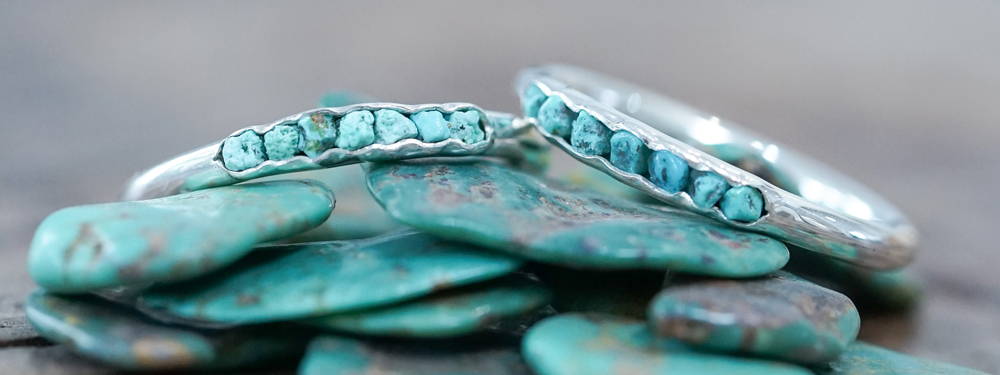
Turquoise is the birthstone for: December
Turquoise zodiac sign:Sagittarius (23 November - 21 December)
Turquoise chakra:
The fourth chakra - the Heart or Anahata chakra.
Use it to get unstuck from irrational worries and anxieties or to bring radical (but positive) ideas earthside.
Thefifth chakra - the Throat or the Visuddha chakra.
Located in the throat area, to release the heat off of difficult conversations. This chakra helps you to have mature, honest conversations, channel creative freedom, and listen to your inner intuition.
How turquoise fits into your life:
Your partner of 11 years, or your partner of 5 years.
The President of your Dolly Parton fan club
Your local sensei
December babies who listen to The Decemberists
Turquoise meaning and vibes
Balance
Health
Immortality
Friendship
Protection
Heritage
Luck
Leadership
Self-acceptance
Prayer
Healing
Communication
Use turquoise for
Lifting your spirits.
Clearing nasty smog from your own personal atmosphere
Breaking writer’s block
Beating jet lag
Anti-hysteria, but also to snap down anyone who calls you hysteric when you’re just expressing natural human emotions
Calming your nerves when public speaking
Your third eye during meditation
Uniting earth and sky on your lunch break
A bit of extra protection against bad luck, bad radio jingles and bad people
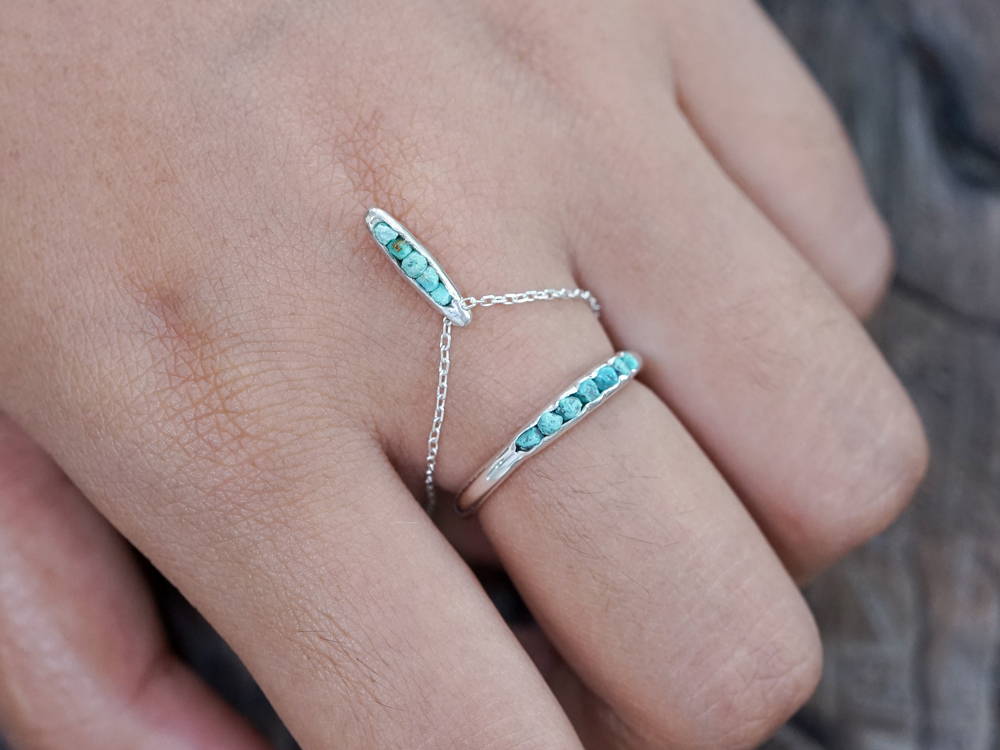
Turquoise is a hydrated copper aluminum phosphate. It's a natural mineral formed when water interacts with copper rich rocks. Its blue green color comes mainly from copper, with iron or zinc shifting it towards greener shades.
Mineral name: Hydrated copper aluminum phosphate
Chemical formula: CuAl₆(PO₄)₄(OH)₈·4H₂O
Turquoise is a mineral that’s commonly used as a gemstone. It doesn’t grow in large, clear crystals. Instead, it forms in tiny, tightly packed structures called microcrystalline masses.
Turquoise has a waxy to subvitreous (slightly glassy) luster. It’s usually opaque and often shows a dark matrix. Those are the web like veins that trace the stone’s original host rock.
Where turquoise is found is often at higher elevations (think Himalayas), in the Sub-Mediterranean deserts or America’s rocky mountains.
A popular ornament among ancient Egyptians, Chinese and Native Americans, these days it’s mostly mined in Iran, Mexico, Turkey and the USA.
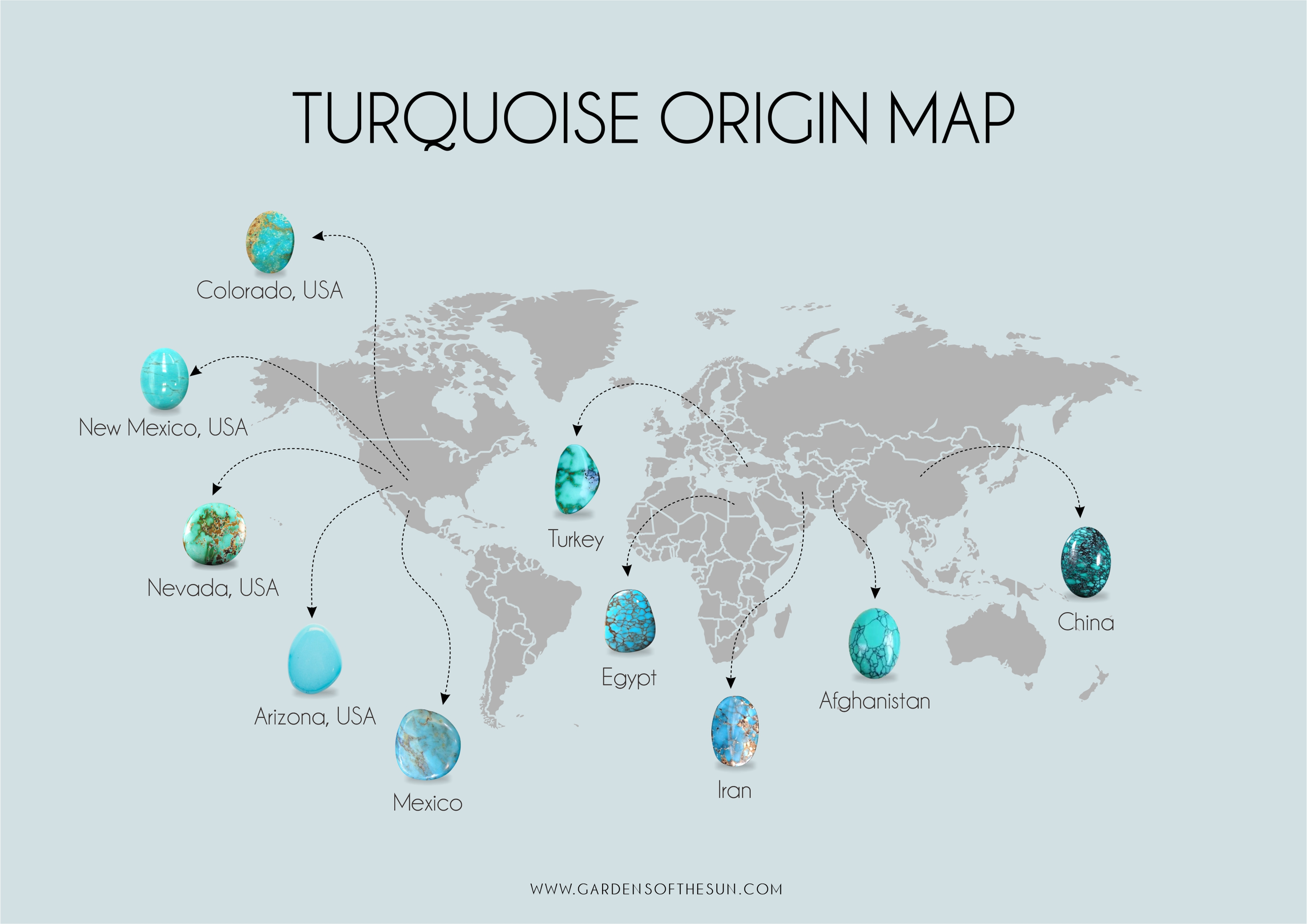
Our turquoise stones are ethically sourced from:
Tibet, USA, Egypt
Every turquoise gemstone at Gardens of the Sun is responsibly sourced with intention and transparency. We trace each stone back to its origin country and will disclose any treatments we're aware of or suspect. We’re a certified B Corp, so ethical sourcing is a rule here, not just a buzzword.
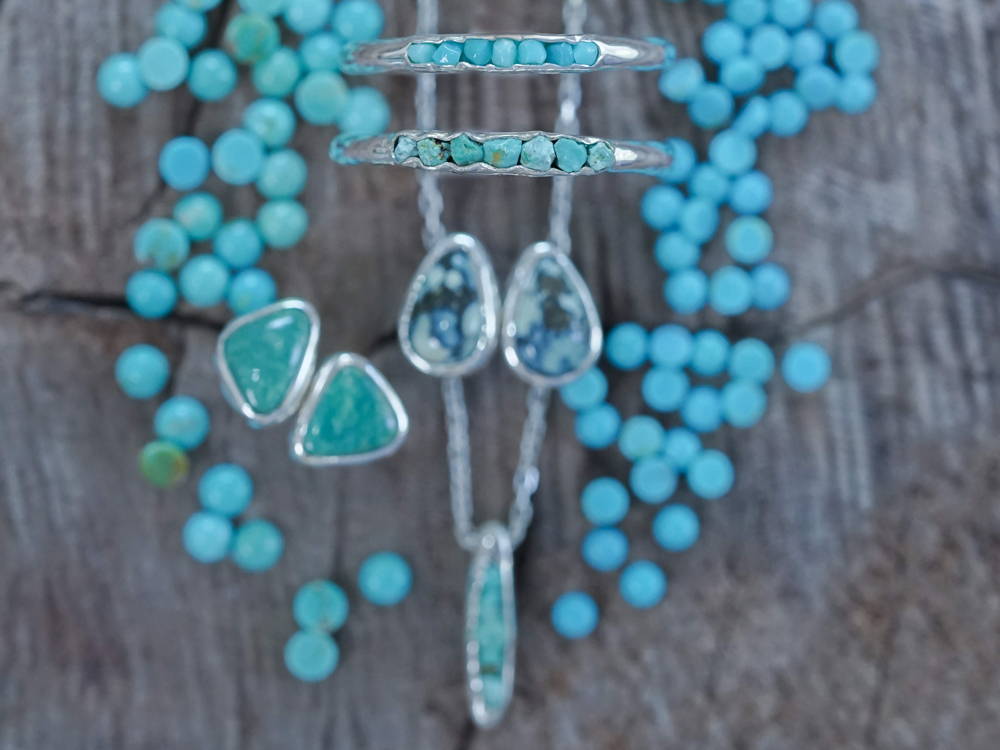
Turquoise hardness aka Tough Love level:
Turquoise ranks 5-6 Mohs scale of hardness with ‘fair’ toughness. Back then, people wore a turquoise necklace as a talisman to their spiritual being. However, as a stone, turquoise is actually pretty brittle and soft. Avoid wearing it everyday or wear it as earrings or necklace rather than a ring.
Common turquoise treatments:
Turquoise may beoiled to improve color. Oftenstabilized with resin to help improve its durability and prevent turquoise from changing color as it reacts with the oils in your skin. Turquoise is a very porous and soft gemstone. The resin fills in the tiny holes and crevices to form a firm stabilized turquoise.Reconstituted turquoise adds resin and dye added to powdered turquoise, and is then pressed into blocks.
Learn more about gemstone treatments.
Turquoise cleaning, care and caution:
Avoid hot water and household chemicals when wearing turquoise. Never use steam or ultrasonic cleaners. Use warm, soapy water, preferably made from natural ingredients, like our lerak jewelry wash.
Turquoise is often classified by its webbing patterns and textures (the dark brown to black matrix around the blue areas).
The more intricate the pattern, the higher value it is.
Different origins also produce different patterns so it’s not uncommon for turquoise to be named after their mining location.
Royston Turquoise
Mined in Nevada, USA, this is the greener variety of turquoise. This stone gives off a 16th century’s painting vibe with its splash of blue-green color on a rustic background.
Tyrone Turquoise
The by-product of a copper mine in Burro Mountains, New Mexico, USA this turquoise is similar to the royston turquoise. Tyrone has a radiant copper glow, adding to its antique look. Tyrone turquoise comes in a range of blue to green colors.
New Lander Turquoise
Mined in Nevada, USA, the new lander turquoise has a more even webbing patterns and matrix. This variety is highly prized for its golden to brown matrix and occasionally found exhibiting orange to yellow hue.
Cripple Creek Turquoise
Mined in Colorado, USA. It’s considered one of the highest grades of turquoise due to its intricate webbing textures. It’s not a solid blue color, nor does it have a patchy webbing. It's very lightly textured and its matrix often shows a golden luster.
Sleeping Beauty
This turquoise is the princess of all turquoise. Polished to its shiniest luster, sleeping beauty turquoise has an even bright blue color and is nearly clear of the dark spider webbing. Sleeping beauty turquoise is mined in Arizona, USA.
Tibetan Turquoise
Comes from the Himalayan mountains. Considered a sacred stone, almost every Tibetan has worn this at some point in their life. Tibetan turquoise has a distinct green glow, and is now a rarity.
Persian Turquoise
Synonymous with the historical robin’s egg turquoise which was famously traded in the Silk Road. Mined in Iran and the subsequent Arabian peninsula, it’s believed that the mining sites are 7,000 years old and still going strong.
Imagine all the turquoise dotting ancient masks and castles. It’s likely they were mined from this area. Persian turquoise tends to have a small amount of copper and thus it’s most sought after for its opaque blue sky color.
Yes. Turquoise shifts its energy the way the sky shifts its light. The colors of turquoise range from bright robin’s egg blue to deep greenish teal, sometimes with webby veins running through it like tiny rivers on a map. Those vivid sky blue stones feel active and uplifting, a nudge toward clarity, movement, fresh thinking. The greener shades feel steadier, earthier, like a slow exhale or a hand on your heart saying, “stay here a second".
Where your turquoise gemstone comes from shapes the story even more. Turquoise from the American Southwest often carries that open road spirit. Warm dust, wide horizons, deep conversations on long drives. Persian turquoise is known for its pure, even blue and smooth surface, the kind you reach for when you want something timeless, intentional, a little iconic. Tibetan turquoise comes with deep matrix patterns and weathered wisdom, offering extra depth for anyone walking through a season of inner work or transformation.
Turquoise is one of those gemstones that meets you where you are. Its color, its origin, its tiny variations... they all tune the energy differently. You get to choose the shade and the story that feels most like you.
Not all turquoise is just plucked from the earth and polished up, ready to wear. A lot of turquoise gets a little help, and how it’s treated can shift the feel and energy of this December birthstone.
Natural, untreated turquoise needs to be treated with care. Some say it carries a purer, deeper connection to the earth. The kind that invites you to slow down and pay attention. It invites you to hold your turquoise gently, and maybe extend that same gentleness to yourself.
The most common turquoise treatment is stabilization. Natural turquoise tends to be porous and a little chalky, so it’s often infused with resin or wax to give it a longer life. Stabilized turquoise holds its blue green color better and isn’t quite as soft and delicate as untreated turquoise.
Turquoise backing is another treatment you’ll come across. That’s when a thin slice of turquoise is glued onto a stronger base, usually resin or another stone. It makes fragile turquoise more wearable, especially in rings or bracelets that get knocked around a bit. You still get the look and energy of turquoise, just with a sturdier foundation.
Then there’s reconstituted or composite turquoise. These are made from small turquoise fragments, mixed with resin and pressed into one new stone. It looks like turquoise, but it doesn’t really feel like it. The energy is scattered, a little hollow. Like something got lost in translation.
Then there’s dyed turquoise. Or worse, stones that aren’t turquoise at all, but imitation turquoise, like howlite or magnesite. Fake turquoise like howlite and magnesite have a much lower hardness than turquoise, and are more fragile to wear as jewelry. The color might be too bright, too blue, too loud. Over time, dyed stones can fade, bleed or just start looking suspicious. If it glows a single color, like neon in club lights, ask questions.
So if you’re picking turquoise jewelry for yourself or someone you love, ask about treatments. Go for natural if you prefer soft and soulful. Choose stabilized or backed turquoise if you want something durable. Just skip the dyed stuff, that's not real turquoise.
December has three official birthstones: turquoise, tanzanite andzircon.
Turquoise is the old soul of the bunch, ancient and grounding, full of sky blue calm and protection.
Tanzanite is the showstopper, rare and vibrant, flashing blue violet color with a wink of mystery, found only in one spot on earth.
Zircon, often the unsung hero, glitters with more fire than you’d expect and comes in a rainbow of colors, from icy blue to champagne.
Major turquoise origins include the USA (Arizona's Sleeping Beauty, Nevada's Royston & New Lander, New Mexico's Tyrone, Colorado's Cripple Creek), Iran (Persian), Egypt (Sinai), Tibet, China Mexico.
Turquoise is the stone of open roads and open hearts. This December birthstone symbolizes protection, clear communication and that grounded kind of balance you feel when everything just clicks. People have turned to turquoise for centuries to guard against bad vibes, to say what needs saying and to bring a little luck into the mix. It’s a gem for travelers, peacemakers and anyone who craves a life that feels honest and true.
It’s considered semi precious, valued for color, matrix, origin and craftsmanship.
Born December 13, her December birthstones are turquoise, tanzanite and zircon.
There are no official day by day stones. Turquoise is the primary birthstone for Sagittarius, her zodiac sign.
Natural turquoise can darken or shift color over time when it comes in contact with the oils from your skin, your favorite lotion, cosmetics or even just a little too much heat. That’s part of its charm, but if you want your turquoise to keep its original hue, go for stabilized stones. They’re treated to hold onto their color better.
Imitation or fake turquoise is often just dyed, so that bright blue can fade fast or even rub off with wear. If you want a stone that’s true to itself (and to you), stick with the real deal and treat it gently.
Natural red turquoise doesn't exist. If you see a stone that looks like a red colored turquoise, that's most likely dyed howlite, dyed magnesite or a composite.


