Your Cart is Empty

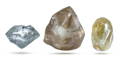
You’re thinking about buying a diamond. Maybe it’s for an engagement ring, maybe it’s a gift, maybe it’s just for you. And you’re trying to figure out: lab grown diamonds or real diamonds? Which is more ethical? Which offers better value? And what’s the actual difference between lab grown vs natural diamonds?
The conversation around diamond ethics isn’t black and white. It’s layered, messy, and deeply intertwined with history, economics, and social justice. So let’s unpack lab vs natural diamonds.
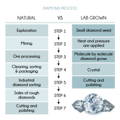
Lab grown diamonds are exactly what they sound like: diamonds grown in a lab instead of pulled from the earth. Scientists have figured out how to speed up nature’s process, using high-tech methods to mimic the intense heat and pressure that form real diamonds. Instead of waiting a few million years, you now can get a diamond jewelry in weeks.
Lab grown diamonds have a lot going for them. They’re chemically identical to natural diamonds. They look the same, test the same, sparkle the same. Even expert gemologists need special tools to tell them apart.
But they’re cheaper to make, which makes them more affordable to buy. And since there’s no mining involved, they sidestep many of the environmental and human rights issues that have plagued the diamond industry for decades.
First developed in 1954 by General Electric, lab grown diamonds were created to satisfy the increasing demand for industrial diamonds. It became widely used by the 1980s, because they were cheap to produce and it’s getting increasingly cost-effective.
They share the same chemical structure as natural diamonds, and have the same strength and hardness. As technology behind lab grown diamonds advances, specialized equipment is needed to distinguish between lab grown diamonds and natural diamonds.
So how are lab diamonds made? By creating the same conditions that form real diamonds underground, just sped up in a lab. There are two main methods:

Both methods are energy-intensive and require large, specialized machinery. Most lab diamonds are produced in China (56%), India (15%)and the USA (13%).
And it’s booming. Nearly half of all engagement rings sold in the US now feature lab grown diamonds. The global market hit over $25 billion in 2024 and keeps growing fast.
Why the surge? Price plays a big part. So let’s start by asking, why are lab grown diamonds cheaper? They’re cheaper because a lab grown diamond costs less to produce than a mined one. They’re faster and cheaper to make. There’s no mining involved, and once the tech is in place, labs can mass-produce diamonds at scale.
And that’s reflected in the price. Lab grown diamonds are often 50–70% cheaper than comparable natural diamonds.
So if you’re wondering if lab grown diamonds are worth it, the answer depends on what you value. If price is your top concern, they offer great bang for your buck.
But more than that, it’s about the story. The natural diamond industry has a long and complicated history; one that involves conflict, exploitation, and environmental destruction.
Lab grown diamonds promise a ‘clean’ break from all of that, which makes them sound like the perfect solution for an ethical engagement ring. But the million dollar question is: are lab grown diamonds truly more ethical to the entire supply chain?
This is where things get murky.
Lab grown diamonds are marketed as ethical, sustainable and conflict free, because there are no mines or violent conflict. No dirty hands. But that’s the surface story. Let’s dig deeper.

One of the biggest selling points of lab grown diamonds vs real diamonds is that they’re ‘eco-friendly.’ No mining means no deforestation, no soil erosion, no polluted waterways.
At least, that’s the marketing. But are lab grown diamonds sustainable? Not always. In fact, the environmental impact of lab vs natural diamonds isn’t as clear cut as the marketing suggests.
Lab grown diamonds are made using immense amounts of energy. HPHT machines run at over 2,000°C for days or weeks. Most labs are powered by fossil fuels, especially in countries like China, where coal is the dominant energy source.
Each carat of polished lab diamond emits around 511 kg of CO2. That’s more than three times the emissions of the average mined diamond (160 kg per carat).
If your goal is to reduce emissions and make an environmentally conscious choice, you’ll want to look much deeper than the “lab = eco” label.

There’s a perception that lab grown diamonds are ethical and traceable, but the reality is murkier. Unlike mined diamonds, which have to adhere to processes like the Kimberley Process (although flawed), lab grown diamonds aren’t regulated to the same degree.
Many are produced in countries with unfair labor conditions. Are lab workers paid fairly? Are conditions safe? What kind of energy is used to produce the diamonds?
There are no mandatory international standards or ethics certification systems for lab grown diamonds yet, and provenance reports tracing a lab grown diamond’s production are still in their infancy. Few brands are able to disclose where and how their lab diamonds were grown. The same scrutiny applied to mined diamonds isn’t applied to their lab grown counterparts.
So if ethics is the goal, we can’t just accept the marketing of lab grown diamonds vs real diamonds at face value. We have to dig deeper and look at how they’re produced and who they’re benefiting.

This might be the most important part of the whole conversation.
When you buy lab grown, your money goes to high-tech companies in the US, China or India. When you buy an ethically sourced natural diamond, your money can go into the hands of small-scale miners, often in developing countries.
Mining is a major source of income for many of the indigenous people we work with. And it’s not just them. Around the world, 40 million people work in artisanal and small-scale mining, and an additional 100 million people indirectly depend on this sector for their livelihoods. When done right, mining can provide jobs, build communities, and drive economic development.
For us, empowering local communities and establishing a greener supply chain is at the heart of what we do. Once you’ve really entered the supply chain and gone all the way to the source, it’s hard to say a ‘better’ alternative for us means a ‘better’ alternative for others.
Labeling natural diamonds mined by artisanal miners as lesser than lab grown diamonds, in terms of ethical and sustainable practices is questionable at best, harmful at worst.
Lab grown diamonds don’t fix unethical mining. They don’t undo the environmental damage of the past. They don’t restore forests or clean up polluted rivers. They just... shift the problem somewhere else and redirect wealth away from these communities.


Countries like Botswana, Namibia, and South Africa benefited from the ‘diamond rush’ in the 1970s. Profit was used to build the community, make people live better, businesses thrive, and the cycle continues. Diamonds uplift their lives.
Yes, it’s a longer supply chain from Borneo to the USA than from a lab in San Francisco to a buyer in New York, but it’s equally weighted by the positive social impact at the other end.
Is there such a thing as sustainable diamonds? Let’s clear this up too.
A truly sustainable and ethical diamond should meet all three. That’s what we aim for at Gardens of the Sun.
Some say lab grown diamonds don’t give them the same energy as a natural diamond. Some feel more empowered knowing their diamond is made in a lab, whereas others feel empowered knowing their diamond benefits artisanal miners. Neither are wrong. The main takeaway is this: diamonds should make you feel good.
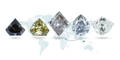
At Gardens of the Sun, we source diamonds from people, not machines. We work with diamond traders who are just as diligent about diamond origins as we are, and source their diamonds from Australia, Botswana, Canada and Indonesia.
Because we believe ethical jewelry is about people. About jobs and impact. As much about creating good as it is about avoiding harm.
Lab grown diamonds are neutral in that sense: they don’t harm, but they don’t help either.
We want our jewelry to do more than that. To be a force for change. A way to shift wealth back into the hands of people who need it most. And to honor the earth by treating it gently, not abandoning it.
For us, wading the murky waters of the supply chain is the only way to turn the table, especially for the artisanal miners. Good work is slowly being done, and we’ve seen how by pushing for transparency and shortening trade lines, those at the end of the supply chain are living better.
The diamonds we offer our clients reflect light as much as they reflect our values.
We work directly with artisanal miners in South Kalimantan, Indonesia. These miners scoop gravel from rivers or holes dug between the rubber trees on their small farm, and pan for diamonds using traditional, low-impact techniques. There’s no violent conflict, no heavy machinery, no deforestation.
We’ve met some of these miners. Seen their villages, met their families, and shared meals with them. For these farmers turned miners, diamonds are a way to build a better life.
The diamonds are polished by independent cutters, often in their homes. Larger and more valuable diamonds are graded by local gemologists and come with a lab report.


Most of our Australian diamonds come with a certificate of origin, so you know exactly where they’re from. Mined under some of the world’s strictest labor and environmental laws, these diamonds meet high standards for ethics and sustainability.

Our Canadian diamonds come with certificates of origin, and some even have a tiny laser inscription on the girdle, like a secret signature. Mining in Canada is highly regulated, with strong environmental and labor protections.
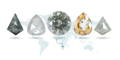
When diamonds were discovered in the 1960s, Botswana was one of the poorest countries in Africa. Diamonds found in Botswana weren’t in alluvial deposits, so they needed help from big mining companies.
The president at the time, Seretse Khama, then allowed De Beers to manage the mining operation, as long as they agreed to a progressive taxation system under which mining companies are taxed at higher rates as their profits go up.
As a result, 80% of profit from the diamond industry stays in the country. Today, those profits support public healthcare, free education, and infrastructure development. Botswana is now one of the richest countries in Africa. It’s a good ending.
Let’s talk about what happens after the purchase.
Lab grown diamonds don’t hold their value like natural diamonds do. Resale markets are flooded, prices drop fast and few jewelers will buy them back. Natural diamonds, especially with certification and known origin, have stronger long term value. That’s true whether you’re passing it down or trading it in.
So if you’re wondering, “Do lab grown diamonds have any value?”... Not in the same way as natural diamonds.

One of the biggest selling points of lab grown diamonds vs real diamonds is that they’re ‘eco-friendly.’ No mining means no deforestation, no soil erosion, no polluted waterways.
At least, that’s the marketing.
The reality? Lab grown diamonds are made in high-energy environments that require immense amounts of electricity. The most common production method, High Pressure High Temperature (HPHT), uses machines that run at over 2,000°C for weeks at a time. And unless that electricity comes from 100% renewable sources (which, in most cases, it doesn’t), lab grown diamonds aren’t as ‘green’ as they seem.
Meanwhile, some natural diamond producers are making real environmental strides. Small-scale miners, like those we work with, have a much lighter footprint than large-scale operations. And in places like Botswana and Canada, responsible mining initiatives focus on land rehabilitation, community development, and sustainability.
And here’s the part that really stings: the push for lab grown diamonds doesn’t undo the environmental damage of the past. It doesn’t restore forests or clean up polluted rivers. It just... shifts the problem somewhere else.
If we really care about sustainability, the answer lies in investing in responsible mining, fair trade practices, and ethical supply chains.
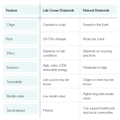
But are lab diamonds real? Technically yes. Emotionally, economically and geologically, they’re different from natural diamonds. They don’t have the same story, history, or geological journey. They’re created for efficiency.
A lab diamond is real in the scientific sense. But it doesn’t carry the same energy or story of a diamond shaped by time. And for many of our clients, that story matters.

Lab grown diamonds aren’t necessarily bad. There are legitimate reasons to choose a lab grown diamond. If it aligns with your personal values, if you want a budget friendly alternative, or if you just love the idea of science creating gemstones, go for it.
But if we’re talking about true ethics, we need to move beyond the “lab grown good, mined bad” narrative.
Because the reality of lab grown diamonds vs natural diamonds is:
So instead of chasing the easiest ‘ethical’ option, maybe the better question is: how can we make natural diamonds more ethical?
For us, that means working directly with artisanal miners, ensuring fair pay, encouraging increasingly safer working conditions, and supporting more responsible practices. It means pushing for traceable diamonds that actively benefit the people who mine them.
Ethical jewelry is about recognizing the human beings behind the jewelry and making choices that genuinely improve their lives. It’s about understanding that real impact doesn’t come from walking away from mining, but from supporting fair wages, safe working conditions, and sustainable practices.
Because sustainable jewelry is never just about the final product. It’s about where it comes from, whose hands shaped it, and the stories it carries. As Céline Semaan puts it,
“Real luxury is understanding the origin of the materials and the hands that created them.”
That’s the conversation we need to be having. Not just about diamonds, but about everything we choose to wear, own, and pass down.


