Your Cart is Empty

What month is opal the birthstone for? October, baby. And she’s never boring.
Opal isn’t trying to impress you. She just is. Chaotic and charming, iridescent and impossible to pin down. Born from water and time, opal is October’s birthstone. The gem of imagination, desire and truth. She doesn’t sparkle like a diamond or glow like a pearl. She flashes. A shimmer here, a burst there. Like she’s in on something you haven’t quite figured out yet.
Playful? Always. Soft? Sometimes. But don’t mistake her softness for weakness.
This is the gemstone that carries entire galaxies inside. Now that’s a birthstone.
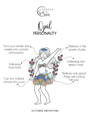
Opal and optimism go hand-in-hand.
Opals spark a childlike playfulness, a motherly strength, a fatherly tenderness,
a sisterly joy, and a brotherly love.
It’s one big happy family.
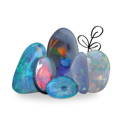
Oh, mighty opal of October. There's not much that needs to be said about its beauty.
Flashes of color dancing in a glimmering stone. This birthstone is as versatile as it is colorful. Use it for playfulness and strength, tenderness and truth, to amplify your karma and keep your cool all at once.
Opals aren’t shy about the magic they carry, and that’s part of their charm. From rainbows dancing in jelly opals to the flashes of color that light up black opals, opal refuses to be mundane.
It all goes back to how opals were formed, you see.
the Sanskrit upala, meaning ‘precious stone’, and later the Greek derivative Opallios, meaning ‘to see a change of color’
Opals are the earth’s capsules of bygone days, with water as its magic wand. The elixir of life that can start civilizations, grows seeds into lush forests, and gives opals its cacophony of colors. Water is where it all starts.
Time creates layers of dust and stories over, captivating age-old wisdom. Settling into the nooks and crannies between dinosaur bones and secret voids the earth forgot. Time and pressure eventually eliminate the water, but the memory remains.
Opal is the birthstone for: October
Opal zodiac sign: Opal is the zodiac birthstone for Libra (23 September-22 October), the sign of harmony, beauty and truth. Sounds like a perfect match, right?
Libras are all about balance, and opal gets it. With flashes of color layered inside translucent calm, opal reminds Libras to embrace all parts of themselves, also the messy, brilliant, ever-changing bits. It’s a gemstone that holds complexity and contradiction, and turns it into something beautiful. Just like Libra does.
Opal is so aligned with Libra energy. It helps you see clearly while still making space for wonder.
Opal chakra:
The fourth chakra - the Heart or Anahata chakra.
A balanced heart chakra keeps your well overflowing with love. It helps you gain the ability to forgive and love yourself and others, even when you think you’ve reached the limit.
The seventh chakra - the Crown chakra or the sahasrāra chakra.
The crown chakra is the bridge to the Cosmos (or the ‘umbilical cord’ to the divine). Located above our head (our crown), the Crown chakra keeps your heart and head open to any divine wisdom coming your way. Activate it whenever you feel spiritually jaded or losing out your sense of focus.
How opal fits into your life:
Libra
Your partner of 14 years
Opal birthstone meaning and vibes: The opal birthstone meaning is all about transformation, imagination and emotional depth. Known for its rainbow-like flashes of color, the opal gemstone meaning is tied to truth, desire, and the ability to see what lies beneath the surface. It’s a stone of introspection and intuition, the kind that helps you trust your gut and honor your feelings, no matter how complex.
As for opal gemstone properties, they include emotional amplification, creative inspiration, and a soothing energy that helps balance your inner world. This October birthstone is both dreamy and grounding. A gentle reminder that your most radiant self comes from within.
Inspiration
Karma
The innocence of youth
Truth
Desire
Playfulness
Imagination
Transformation
Self-confidence
Fidelity
Optimism
Use an opal gemstone for:
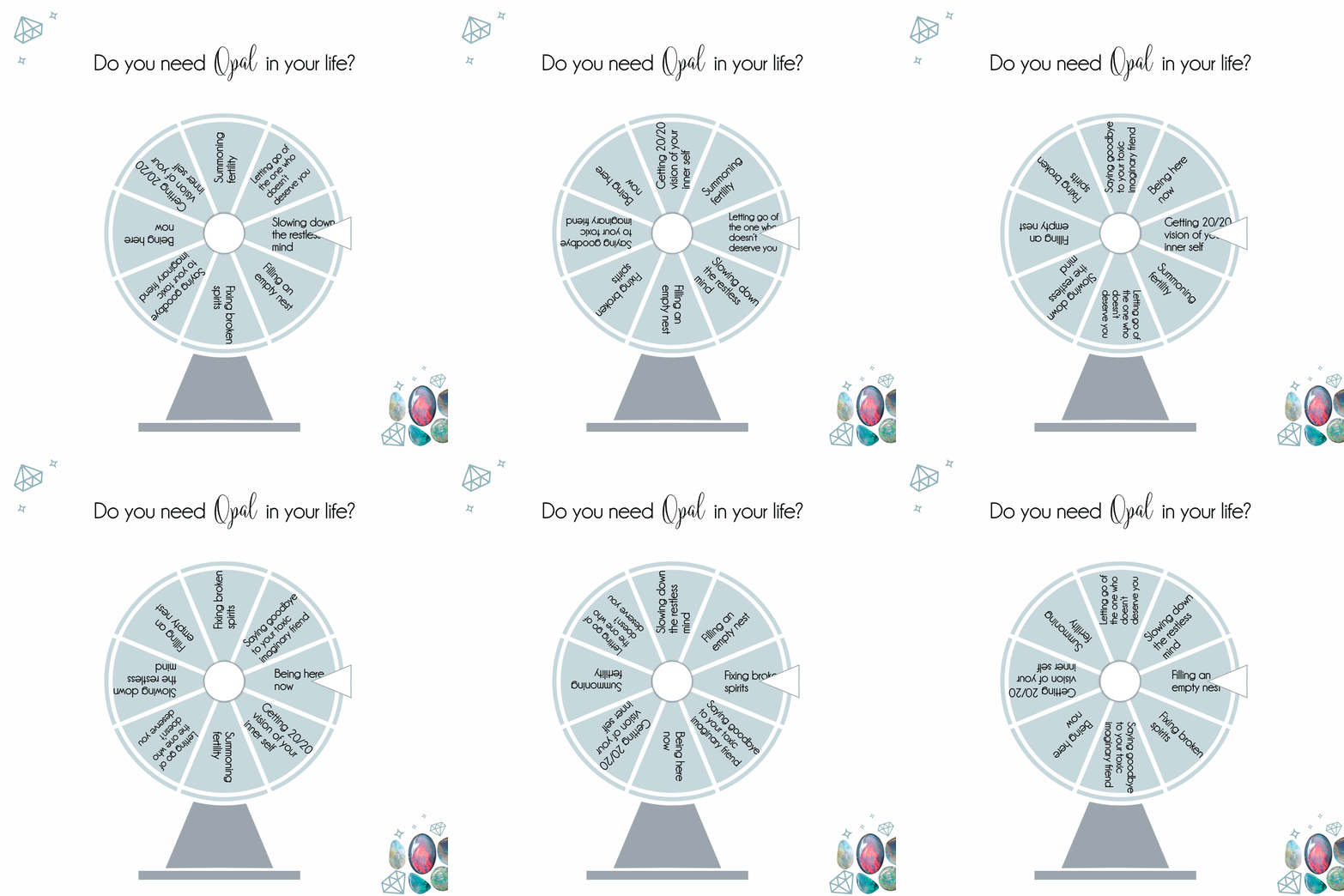
Slowing down the restless mind
Letting go of the one who doesn’t deserve you
Getting 20/20 vision of your inner self
Fixing broken bones or broken spirits
Summoning fertility by placing under a pillow
Filling an empty nest
Saying goodbye to your toxic imaginary friend or bad dreams
Being here now
Opal isn't the only October birthstone. If you’ve always associated October with opal, you’re not wrong, but you’re not done either. The October birthstone month also belongs to tourmaline. This gemstone gives you a rainbow of ways to wear your story, full ofplayfulness and expression.

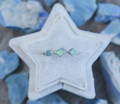
Opals are mined around the world, from Australia to Ethiopia to Peru, but Australia and Indonesia are our favorite sources of opal!
Different regions inevitably produce different kinds of opals.

Our opals are sourced from:
Australia (Lightning Ridge, Jundah, Coober Pedy, Yowah), America and Indonesia
Tough Love level:
Opal ranks 5.5-6.5 Mohs scale of hardness with ‘very poor’ toughness.
It’s best to use opal as earrings or necklace, especially for daily use. A bezel setting will better protect this October gemstone than a prong setting, as it offers more protection with the metal wrapped around the stone.
When used for a ring, make sure to take it off anytime you’ll be in contact with perfume, soaps, detergents or the likes. Keep it off when you’re working out or doing anything laborious with your hands as opal is considered fragile.
Smoking; oiling; resin treatment; synthetic opal.
Smoking may be done on white or transparent opal to turn it black, which will fetch higher value. The black smoke will literally permeate into the opal’s pores, turning it black. It’s more common on Ethiopian opals, which unscrupulous sellers may market as natural black Australian opals.
Oiling is done to fill cracks in the opal, and to increase its durability. Beware that this isn’t the most effective treatment to hide cracks and fissures.
Resin treatment is done on thin slices of opals to give it more durability and size. It can also be used to seal moisture inside the rock and smoothen the pits, giving it a shinier appearance.
When a thin slice of opal is assembled with a base and/or a clear top, it’s called doublet opal or triplet opal. These are sold for a fraction of the price, but that's because also only a fraction of genuine opal is used. Doublets and triplets are not solid opal. Composite opals aren’t difficult to spot. To check whether or not your opal is a composite, look from the side and find any visible layers.
Synthetic opal is often made from plastic. It can be indistinguishable from natural opal, but synthetic opal might not have the hardness and properties of a real opal. Any trustworthy jeweler should disclose this information before selling it to you.
Cleaning, care and caution for opal gemstones:
Since opal loves water and is a soft stone, avoid ultrasonic cleaners and harsh chemicals. If you really need to clean your opal, use warm, soapy water, preferably made from natural ingredients, like our lerak jewelry wash! Read more about caring for your opals here.
Opals are anything but one-size-fits-all. With so many types of opal gemstone out there, each variety has its own personality. From the bold and broody black opal to the softly glowing white opal, and everything in between. Whether you're drawn to jelly-like textures, vibrant flashes of fire, or earthy matrix patterns, the world of opal types is wildly colorful and full of surprises.
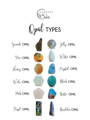
Black opal has a very dark body tone which really brings out the color.
Jelly opals is transparent and looks like wobbly jelly.
Fire opal is known for its distinct orange color, mostly found in Mexico.
White opal is milky - some may have rainbows in it.
Honey opal is a warm yellow opal.
Crystal opal is translucent with more colorplay than jelly opal.
Blue opal is mostly found in Peru. It doesn't have the wild display of colors opal is so known for.
Pink opal is soft pink with milky-white swirls. Commonly found in Peru.
Welo opal is mined in Ethiopia. It's hydrophane and when it absorbs water, it may become yellow.
Butte opal is mined in Oregon, USA. It’s famous for a range of large opals with aqua-blue bodytone and pink, lavender clouds inside.
Fossil opal are bones, teeth, and parts of dinosaurs fossilized as opals.
Boulder opal are ironstone boulders which contain thin seams and patches of precious opal, think veins of color in spectacular patterns.
Yowah and Koroit nuts are caramel brown “nuts” with veins of precious opal matrix inside, found in Australia.
Don’t let yourself get carried away by composite opals - these aren’t solid opals, but a thin layer of opal on wood, obsidian or ironstone. It’s like what veneer is to wood. They’re much less valuable than solid opal.
Psst. we only stock solid opals for our designs.
So, what color is opal birthstone? Honestly, it’s hard to pin down, and that’s the beauty of it. Opal gemstone colors range from milky white to jet black, from fiery orange to pastel pink, from oceanic blue to honeyed gold. Each color has its own kind of magic.
The black opal gemstone is the rarest and most striking, with neon-like flashes that feel alive. The white opal gemstone glows with soft rainbows in a creamy base. The fire opal gemstone often found in Mexico burns bright in shades of red, orange or yellow. And the blue opal gemstone often found in Peru has a serene, watery feel. Whatever your vibe, there’s an opal that gets it.
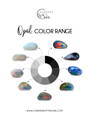
When purchasing a high quality opal, the gemstone will be graded for brightness (how vibrant its colors are), color and patterns (with exotic names like harlequin, pinfire, floral, broadflash and peacock tail). In the opal industry, opals are graded based on their bodytone (N1 for black all the way to N9 for white).