Your Cart is Empty

Antique cut diamonds are having a pop-culture moment. When Taylor Swift flashed her engagement ring, the world suddenly wanted to know: what's an old mine cut diamond? We expect to be making a lot more antique cut diamond engagement rings.
This article is about antique cut diamonds, referring to the cutting style, not the age of the stone itself. We don’t deal in pre-owned or estate diamonds, but we do love sourcing diamonds from Indonesia. Many of the cutters here still work with simple tools, hand cutting diamonds without the precise finish of modern brilliant cuts. The result? Diamonds full of character, carrying the marks of human hands. That’s the beauty we want to share with you.
So, what is an old mine cut diamond? It’s one of the earliest versions of the brilliant cut, hand shaped in the 1700s and 1800s. Chunky cushion shape, high crown, small table and open culet. These details set them apart from today’s brilliant cut diamonds. Old mine cuts were made to glow in candlelight, not under a spotlight or microscope.
And just to clear things up; are antique and old mine cut the same? Not exactly. Antique is the umbrella term for all pre-1920 hand-cut diamonds, while old mine cut is one style within that family. Think of it as one chapter in the long history of antique cuts.
No wonder people are talking. Old mine cut diamonds feel a little mysterious, a little less perfect, and all the more lovable for it. They tell tales with every facet in a way modern cuts can’t match. That’s why we keep coming back to them.

So what are antique cut diamonds?
Antique cuts were the first diamond cuts ever made. Shaped by hand, long before machines took over. Cutters worked by eye, chasing light with simple tools. That’s why antique cut diamonds look so different from the ones you see today.
Modern diamonds are cut with machines or laser, their symmetry and precision making these diamonds identical. Antique cuts are the opposite. Their facets are bigger, chunkier, sometimes uneven. They don’t dazzle with the blinding sparkle of modern stones. Instead, they glow softly, carrying a warmth and character that only comes from being shaped by human hands.
Imperfect? Yes. And that’s what makes them irresistible.
That brilliant cut diamond you see everywhere (on Pinterest, in glossy ads, or the window of a high-end jeweler) is a modern cut. Designed for maximum sparkle under electric lights.
Antique cuts live in a different world. They weren’t made to blind you with brilliance, but to glow softly in the flicker of candlelight. Their charm is quieter, more soulful. Less uniform, more human. Where modern cuts chase perfection, antique cuts lean into character.
That hand cut tradition still lives on in Indonesia, where we source many of our diamonds. Local cutters often work with simple tools, echoing the same approach as centuries ago. Every facet reflects a choice made by eye, and that’s exactly what we love about them.
And it’s not just us. When Taylor Swift said yes to an old mine cut diamond, she brought antique diamond cuts back into the spotlight.
Different types of antique cut diamonds
(and their history!)
Before electricity, diamonds were cut by hand under candlelight or daylight. That’s why antique cuts often have larger facets, more weight, and less symmetry. Each change in technology brought subtle shifts: more facets here, a smaller culet there, a wider table over time... All slowly shaping the way diamonds reflect light.
Think of it as a long story told in chapters. Each antique cut is a snapshot of its era, showing how cutters balanced skill, tools, and imagination to chase light in stone. From polki to rose cut, single cut to old mine and old European, here’s how each came to life.
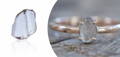
Polki diamonds are where the story begins. Thought to date back 2,500–3,000 years in India, the birthplace of diamonds, they’re some of the oldest diamond styles still used today. Unlike modern faceted stones, polki diamonds are often left in their rough form. Instead of sharp facets, they’re polished flat, with a thicker body than diamond slices.
They don’t sparkle the way we expect diamonds to now. Instead, they offer a soft sheen, almost like light diffused through mist. Cloudy, included, often lower in color grade, they carry a rawness that feels ancient and unpolished in every sense.
Polki diamonds are rarely used as a bold solitaire. Instead, they’re usually set in clusters, each stone shaped and placed individually to fit. The value isn’t in the stone’s resale, but in the craftsmanship of the jewelry itself: a centuries old tradition of working with what nature gave, rather than reshaping it into perfection.
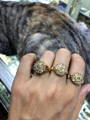
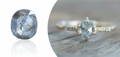
By the 1500s, cutters had discovered that only diamonds could cut diamonds. That’s when the rose cut appeared. Imagine a flat bottom with a domed top covered in triangular facets, like a crown turned upside down. With no pavilion beneath, you can sometimes look straight through a clear rose cut diamond.
Rose cuts glow. Their facets catching just enough shimmer to feel intimate and romantic. It doesn't sparkle the way a brilliant cut diamond does. Today, they’re loved for their vintage look, larger face-up size, and the way they flatter a hand with excellent coverage. Soft, subtle, and quietly striking.
By the 1600s, diamond cutting took another step forward with the single cut. Sometimes called the “eight cut”, this style had eight facets on the crown, eight on the pavilion, plus the table: 17 in total. A simpler, early version of the round cut.
Single cut diamonds are easy to recognize: a large flat table and fewer, chunkier facets. They don’t have the fire of a modern brilliant, but they have a clean, understated charm. These days you’ll most often see them as side stones in tennis bracelets, earrings, or vintage watches. Set next to colored gems, their quiet whiteness highlights the color without stealing the show.
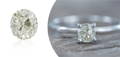
Fast forward to the 1700s and 1800s, the era of the old mine cut, the ancestor of today’s cushion cut. These were hand cut by candlelight, with cutters relying on their eyes rather than machines. The result? Chunky facets, high crowns, small tables, and a broad open culet at the bottom.
Most old mine cuts followed the natural octahedral crystal shape, which often meant a soft cushion outline, though you’ll find ovals, pears, and even irregular shapes too. They sparkle more than rose cuts, but their brilliance is deeper, more fiery, like embers rather than sparks.
Old mine cut diamonds carry the romance of imperfection. Each stone feels alive in its own way, shaped less by geometry and more by the human hands that coaxed out its light.
To level up the refraction factor, jewelers started making the bottom part of the diamond longer and the culet slightly more pointy (but the culet was still wider, because no technology existed to make a pointy tip yet). This way, light could travel further and bounce back and forth inside the diamond, creating ‘fire’. If you look at an old mine cut diamond from the side, you might find the girdle to be thick and occasionally unpolished.
This was the first attempt to create a diamond cut shining for centuries. Shape consistency and symmetry was of less importance than play of light.
Old mine cut diamonds come in all kinds of shapes and proportions. Most have that soft pillow cushion outline, because cutters tried to follow the natural octahedral crystal to save as much weight as possible. But you’ll also see ovals, pears, and quirky shapes that refuse to fit a mold.
The term old mine cut is often used as a catch-all for these early brilliant styles, no matter their exact outline. Some are almost square with rounded corners, others wander into irregular territory, what gemologists sometimes call a crude old mine cut. Each one is a little different, a little wonky, and that’s exactly what gives them their soul.

By the late 19th century, diamond cutters had refined their craft into what became the old European cut or OEC. Think of it as the bridge between the old mine cut and the modern round brilliant.
Old Euro cuts still have a visible culet, but it’s smaller than the old mine’s. They have a rounder crown, smaller table, and a deeper pavilion. Designed with candlelight and gaslight in mind, they play with light differently, offering bursts of color and refraction, but not the machine-calculated sparkle of today’s brilliants.
This was the diamond of the Art Deco era: dramatic, romantic, and full of character.

What’s a culet?
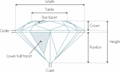
The culet is the tiny facet at the very bottom of a diamond. Jewelers often look at it first to tell whether a stone is antique or modern cut.
Before modern tools, cutters couldn’t shape a perfect point at the base of the diamond. Instead, they left a flat facet. That’s why old mine cuts and old European cuts almost always show a culet large enough to spot with the naked eye.
Far from being a flaw, the culet lets light slip through the diamond in a softer way, creating little flashes of color and a candlelit glow. It’s one of the easiest ways to recognize the hand cut nature of antique cut diamonds.
How do antique cut diamonds compare to modern diamonds?
At first glance, antique diamond cuts might look like any other diamond you see in a jewelry case. From the top view, the difference isn’t always obvious to the untrained eye.
But look closer, and the clues appear. The easiest giveaway is the culet, that flat facet at the bottom. Modern round brilliants are cut to a sharp, invisible point. Antique cuts leave a larger culet, often visible to the naked eye. It’s like the diamond’s telling you it was shaped by hand, not machine.
You’ll also notice their proportions. Antique cuts tend to have fewer, chunkier facets and less symmetry than modern stones. Each one carries a slightly different outline: softer corners here, uneven facet lines there. Turn one in your hand and you’ll see the sides and bottom are cut differently too, so they bend and reflect light in their own way.
This shows in how the diamond sparkles. Antique diamonds glow with a softer, candle-like shine. More mellow and romantic, made for low light. Modern diamonds blaze with more fire and brilliance, so it catches any light that reaches it.

The difference between polki and rose cut diamonds comes down to the way their surfaces are shaped. Polki diamonds usually keep their natural outline, polished flat with just a few broad planes. Sometimes they’re barely faceted at all, which is why they often look irregular and asymmetrical. Cutters were more concerned with saving size than chasing symmetry.
Rose cut diamonds have a more recognizable pattern. A flat bottom with a domed top covered in facets, like little triangles radiating outward. They still feel old world and imperfect, but compared to polki diamonds, rose cuts are generally more balanced in shape.
Polki diamonds are loved for their raw, rustic character. Rose cuts bring a softer romance, glowing gently in low light, a little more refined.

The shape of the old mine cut vs cushion cut can be confusing. Both cuts have slightly rounded, curved sides with a pillow-like appearance, and the old mine cut is considered the precursor of the modern cushion cut. But, where the cushion cut only comes in square and rectangular shapes, the old mine cut may also be pear, marquise or triangle shaped.
The key difference between the two is the way they are cut. The old mine cut uses primitive processes under low lighting conditions, resulting in wonky shapes and uneven facet sizes. There were no standards for the shape, and cutters attempted to save as much of the diamond weight as possible. As compared to the modern cushion cut, old mine cut diamonds have a smaller table, taller crown, deeper pavilion, chunkier facets and open culet rather than a pointy tip.
Modern cushion cuts aim for symmetry, color retention and play of light, meant to sparkle under electric light. The culet got so small to the point it disappeared, the table got wider, the crown lower, the pavilion more shallow and the facets smaller and more elongated. It’s significantly lower profile than the old mine cut.
Both the old mine and cushion are brilliant cuts, but they react to light differently. The different facet shapes and sizes makes the old mine cut show larger face-up patterns of light and dark and less brilliance than the modern cushion cut.
Placed next to a modern diamond, the proportions of an old mine cut diamond can look overly large and bulky at first glance. It’s only under candlelight that you see its soft, romantic glow.
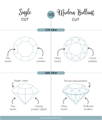
The old mine cut and the cushion cut can look surprisingly similar at first glance. Both have softly rounded sides and a pillow-like outline. That’s no accident, because the old mine cut is the ancestor of today’s cushion cut.
The difference lies in how they’re made. Old mine cuts were shaped by hand in low light, with cutters saving as much of the rough diamond as possible. That’s why their tables are smaller, crowns taller, pavilions deeper, facets chunkier, and why their outlines sometimes wander into pear, marquise, or even triangle shapes. Symmetry wasn’t the goal, light and weight were.
Modern cushion cuts are their polished descendants. Cut with machines, they’re square or rectangular only, with a wide table, shallow pavilion, low crown, and a sharp point instead of an open culet. They're engineered for balance, symmetry, and sparkle under electric light.
Both are brilliant cuts, but they play with light differently. A modern cushion flashes brightly and evenly. An old mine cut shows bolder patches of light and dark, less brilliance overall, but under candlelight, it glows with a soft, romantic warmth that modern precision cuts can’t quite capture.
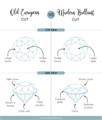
The Old European cut has a smaller table, higher crown with a steeper angle, deeper pavilion and a larger culet than the modern round brilliant cut. The modern round brilliant cut is designed to push its fire and brilliance up through the middle of the stone. The Old European cut looks less brilliant from the top down view, yet offers more brilliance and fire from the side.
Taylor Swift’s ring is going to have ripple effects. Not because everyone will suddenly hunt down old mine cut diamonds, but because her choice shifts the cultural mood around what people value in a diamond.
Lab diamonds have been winning ground the past decade because they’re cheaper, accessible, and marketed as the ethical alternative. But Taylor choosing an old mine cut natural diamond changes the story people tell themselves. Here’s why:
She made imperfection aspirational.
Old mine cuts aren’t perfectly symmetrical. They’re chunky, hand cut, a little wonky. Taylor’s choice signals that “perfect sparkle” isn’t the only definition of beauty, and that uniqueness and history matter too. That makes mass produced lab diamonds feel a bit too uniform by comparison.
She put age and story back in the spotlight.
Lab diamonds are all about the new: new tech, new affordability, new sustainability claims. Antique cuts are the opposite: they carry age, stories, and a human handprint. When the world’s biggest pop star embraces story over precision, it re-frames what counts as “special.”
She attached cool factor to old cuts.
Celebrity choices influence demand. Meghan Markle’s trilogy ring made three-stone designs hot again. Taylor’s old mine cut could make antique-inspired cuts feel more desirable than the latest manmade diamond trend.
She blurred the ethics conversation.
Lab diamond brands pitch themselves as guilt-free. But if buyers start asking for antique cuts, they might also learn that re-using or repurposing old stones is one of the most sustainable choices of all. That undercuts the simplistic “lab = ethical, mined = bad” narrative.
So will lab diamonds lose demand? Probably not overnight. But Taylor’s ring does nudge the cultural pendulum back toward natural diamonds, specifically the soulful, storied ones. Instead of “bigger for less” (lab diamonds’ main appeal), more people may start wanting “different, rare, full of character”. If the last decade was lab diamonds’ rise, this next one might belong to antique cuts and natural diamonds with traceable origins. Taylor just gave that trend a megaphone.
Can antique cut diamonds be new?
An antique cut diamond doesn’t always mean the stone itself is antique. Sometimes a newly mined diamond is cut in an antique style. If you’re after a true antique, look for a stone cut before the 1920s. By definition, that’s what makes it antique. Anything older than a hundred years carries that title. An antique cut, on the other hand, is about the style rather than the age.
This is where our Indonesian diamonds come in. Many of the stones we source from Borneo are still mined the old way: dug up by hand, one by one, from riverbeds and patches of earth. It’s not so different from a hundred years ago, when diamonds were found and collected without heavy machinery. There’s a rhythm and patience to this kind of mining, a closeness to the land that you don’t find in industrial pits.
Once unearthed, these diamonds often go to local cutters who still use simple tools, measuring by eye instead of computer. When we commission a cut, we sometimes ask for an antique style, like old mine cut, old Euro cut or single cut, because we love the way these facets carry the marks of human hands. A little uneven, a little irregular, but full of life and character.
And because we work directly with artisanal miners and local cutters, we know these stones are mined with fair pay, without funding violent conflict, and with a shorter supply chain.
That’s what antique cuts have always been about: not just brilliance, but story. So can antique cut diamonds be new? Yes.
So should you purchase a truly antique diamond ring or an antique cut diamond ring?
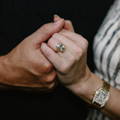
A true antique diamond ring can be breathtaking, but also breathtakingly expensive. Taylor Swift’s old mine cut engagement ring, for example, is estimated at well over $500,000. These rings carry stories that can’t be recreated: maybe they once belonged to royalty, or maybe they’ve been passed down through generations of a family. That kind of history is priceless.
But there’s a catch. Antique jewelry doesn’t always come with an ethical past. Many were made in times when miners weren’t paid fairly, or when conflict diamonds entered the market unchecked. That’s a legacy you may not want to carry forward.
An antique cut diamond ring offers the best of both worlds. You get the hand-cut charm, the character, the glow, the history in style, but with the assurance that your diamond was sourced responsibly. No conflict, no hidden guilt. Just a ring you can wear proudly today and pass down tomorrow, knowing its story is clean from the start.
Are antique diamond cuts cheaper than modern diamonds?
Not usually. True antique diamonds cut over a century ago are rare, and rarity drives up value. A diamond cut in the 17th or 18th century is a fragment of history, and collectors are willing to pay a premium for that. Their value often grows over time, especially now that antique diamonds are having a resurgence.
Antique cut diamonds, on the other hand, can be more accessible. These are newly mined stones cut in antique styles, like old mine or old European cuts. They carry the same charm in shape and character, but without the centuries-old price tag.
And then there are lab diamonds. They’re cheaper still, but what you save in cost, you lose in story. A lab diamond may look the part, but it doesn’t carry the hand cut irregularities, the human touch, or the centuries of tradition that make antique styles so captivating.
So while genuine antiques may cost more than many modern diamonds, antique cut diamonds give you that softer, candlelit glow without a museum budget. And lab diamonds, expect to pay even less, but also have less of a story.
What are the best settings for antique cut diamonds?
The right setting highlights the traits of antique cut diamonds instead of hiding them. Open settings, like wire basket prongs or cathedral bezels, let more light enter the stone from every angle. That means more glow, more of that candlelit shimmer antique cuts are known for.
Three stone or cluster settings also work beautifully, adding brightness and contrast without overwhelming the diamond itself.
Because antique cuts often have irregular outlines, the setting and design will have to follow the stone, not the other way around.
5 reasons to choose an antique cut diamond
Antique cut diamonds are full of character and history. With their soft candlelit glow and facets shaped by hand, they carry a kind of soul that modern precision can’t replicate. Here are five reasons to fall for an antique cut diamond.
Each one is one of a kind
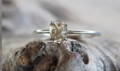
Our polki cut diamond, a nod to the oldest diamond cutting technique.
Hand cut by eye, no two antique cuts are the same. Slightly uneven facets, quirky proportions...those “imperfections” are what give them soul.
You want less waste
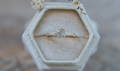
Design your own ring with this old cut diamond from Borneo.
Older diamonds tend to be chunkier with less faceting, and thus, less cutting. When cutters facet a stone, they’re essentially polishing bits off the diamond. Back then cutters and traders tried to minimize their waste and maximize what they have, leading to chunkier diamonds with thicker girdles. These days diamonds are cut with higher standards of precision, so that more of the diamond is polished off.
They carry history
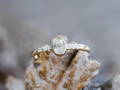
Oval old mine cut diamond hailing from Kalimantan, Indonesia.
Whether it’s a true antique cut from centuries ago, a newly mined stone shaped in the same style, or a diamond passed down through generations, antique cuts connect you to the long story of diamond traditions. They remind us that jewelry is carried, loved, and eventually handed on, gathering new chapters along the way.
They glow, not glare
A play on the unique characteristics of each stone.
Antique cuts were made for candlelight, so their light play is softer, warmer, and more romantic than the sparkle of modern brilliants.
They’re ethical when you know the source.
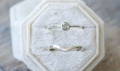
Glows like a candle and fits all occasions, day to night.
Many antique diamonds come with stories that stretch back centuries, but their origins aren’t always traceable. That’s why we also work directly with artisanal miners in Kalimantan, Indonesia, and commission antique cuts locally, giving you the character and charm of these historic styles, paired with the peace of mind of knowing exactly where your diamond came from.
They're timeless
From Georgian and Victorian rings to Taylor Swift’s engagement ring, antique cuts keep showing up in love stories century after century. They feel as relevant on a modern hand as they did hundreds of years ago, carrying a beauty that lasts well beyond a single lifetime.
Think antique cut diamonds are right for you - and for theRing?
We think so too.