Your Cart is Empty

Updated 2026
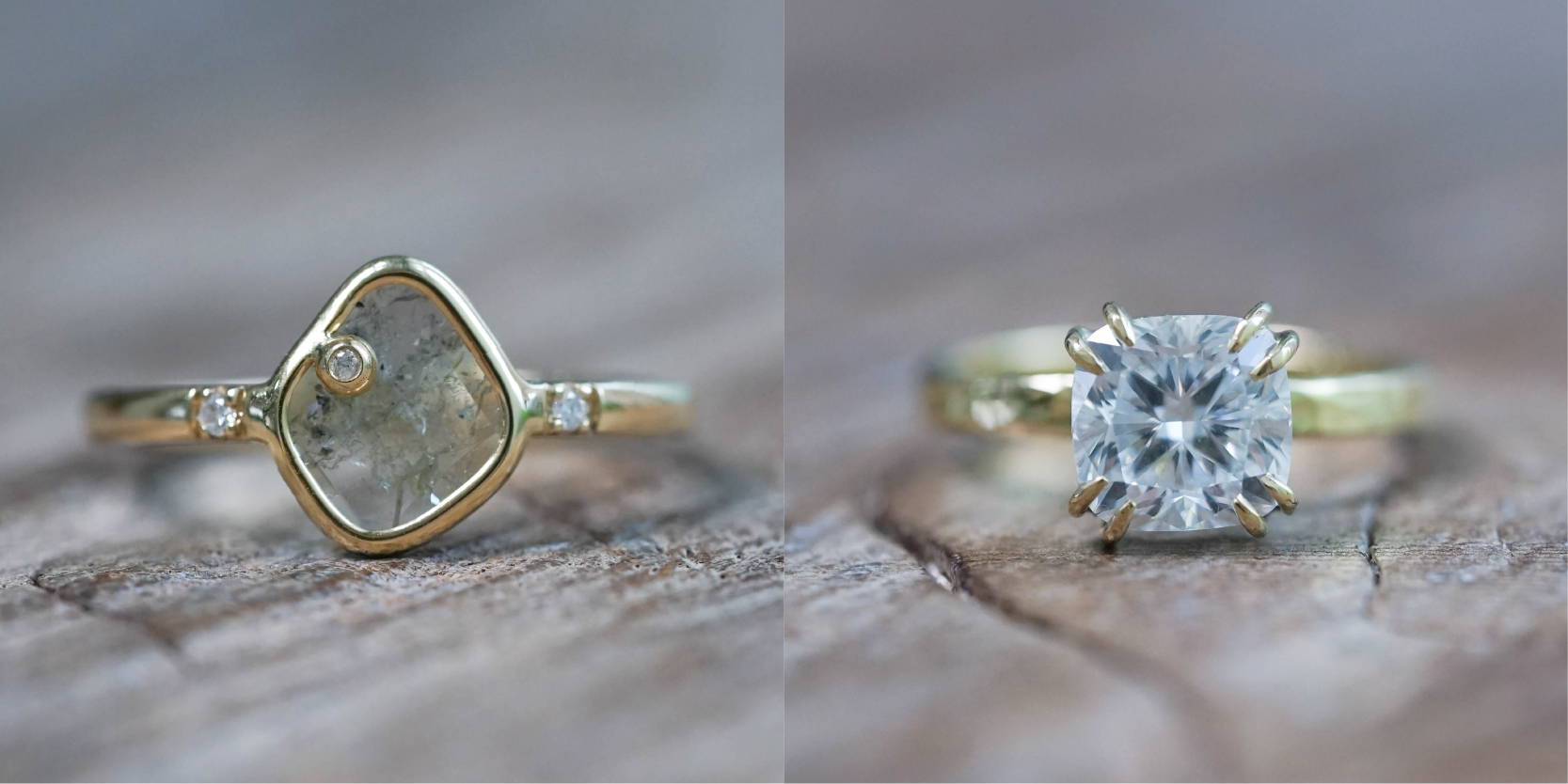
Diamond slices vs polished diamonds: what’s the difference? A diamond slice is a thin cross section of a natural diamond. It keeps the diamond’s original outline and inclusions visible, instead of cutting away the diamond’s outer edges and inclusions to chase symmetry and perfection.
Diamond slices tend to attract a certain kind of person. Someone who wants something personal. Someone who’s a bit tired of perfect round diamonds. Or someone who once stared at a gemstone long enough to notice it looked like a map, a storm system or a tiny mistake that refused to be corrected.
If that’s you, you’re in the right place. This diamond slice guide walks you through what actually sets diamond slices apart from polished diamonds, how they behave in real life, and what choosing one really means.
→ If you’re here because you want jewelry, shop diamond slice jewelry.
If you’re here because you like to understand what you’re wearing, keep reading. We’ll look at how diamond slices are made, how they hold up over time and what people usually mean when they say “polished diamond”.
A diamond slice is a thin, flat section cut from a natural diamond, showing off the stone’s true outline and natural inclusions. Instead of being carved into a classic round or oval, it keeps more of its original shape and skin. You’ll see the patterns and marks from its formation, like a time capsule you can wear.
Diamond slices are cut from larger, often included diamonds. These slices are cut by lasers, sometimes adding a few gentle facets to one side. The result is a cross section that feels almost geological, with the inside of the diamond on full display.
Unlike traditional diamonds that chase fire, shine and symmetry, slices are all about raw character and visible history. The more interesting the inclusions, the more sought after and expensive the slice.
Feature
Diamond Slice
Polished Diamond
Look
Flat, thin cross section with a natural outline, visible inclusions
Cut for light play, symmetric, three dimensional with a pavilion (pointed base) and standardized top
Shape
Irregular, organic
Standardized shapes (round, oval, princess, etc.)
Uniqueness
One of a kind
Classic, many look similar
Setting options
Always bezel (for security)
Prongs, bezel, tension, many more
Durability
Can chip at thin edges or crack upon impact
Robust, less likely to chip
Best Use
Rings (if set securely), necklaces, earrings
Any jewelry, daily wear
Price drivers
Size, inclusions, shape, rarity
Cut, clarity, color, carat
Trend sensitivity
Still a niche choice
Timeless
Availability
Most jeweler’s won’t carry these
Available at most jewelers
You might see the word polki pop up when shopping for diamond slices. Here’s what you need to know:
Both have to be set in protective settings, usually bezels or diamond clusters, because of their flat structure.
Diamond slice rings are for people who want their jewelry to tell a story, not just shine in the light. They’re not the standard engagement ring you’ll find in movies or magazines. Here’s what you need to know if you’re considering one:
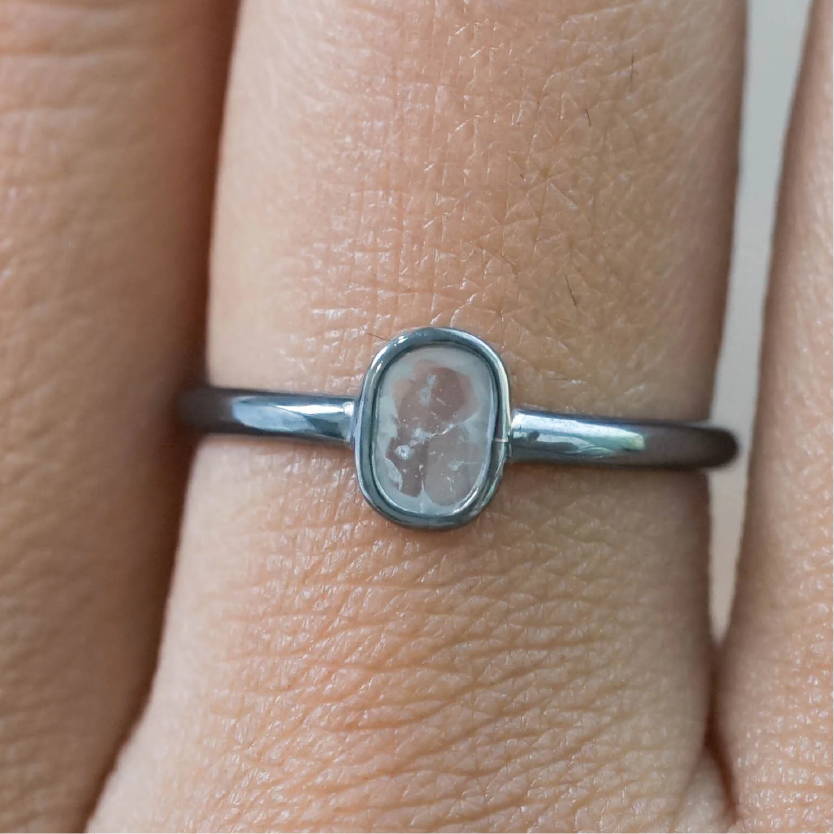
We don’t set diamond slices with prongs. That’s because diamond slices are thin. Most of the ones we carry are only around 0.4 to 0.9 mm thick. Prongs grip just a small part of that edge, which leaves the rest exposed to knocks and pressure.
We use a bezel setting instead. It wraps the slice in metal and supports the full perimeter, which makes it more secure and helps reduce the risk of chipping or cracking.
Diamond is the hardest natural material on earth, but that only tells half the story. A thin diamond slice is strong for its size, but its edges can be vulnerable. Hard knocks, impact or dropping your ring onto tile can be risky.
If you tend to be tough on your hands or clumsy, a classic polished diamond may be the safer bet. But if you’re after something special and you’re happy to give it a bit of extra care, a diamond slice ring or diamond slice engagement ring can last a lifetime.
Diamond slice rings suit people who love seeing patterns, want a low profile and are happy with a little extra care. If you remove your rings for gardening, boxing or rock climbing, you’ll be fine.
Diamond slices aren’t for you if:
They are for you if:
Trapiche (say it like tra·PEE·che) isn’t just a tongue twister. It’s a geological fluke that happens when minerals grow in a way that creates “spokes” radiating out from the center, like the old sugar mill wheels you see in old villages. Only, these “wheels” formed millions of years ago, under pressure most of us will never experience.
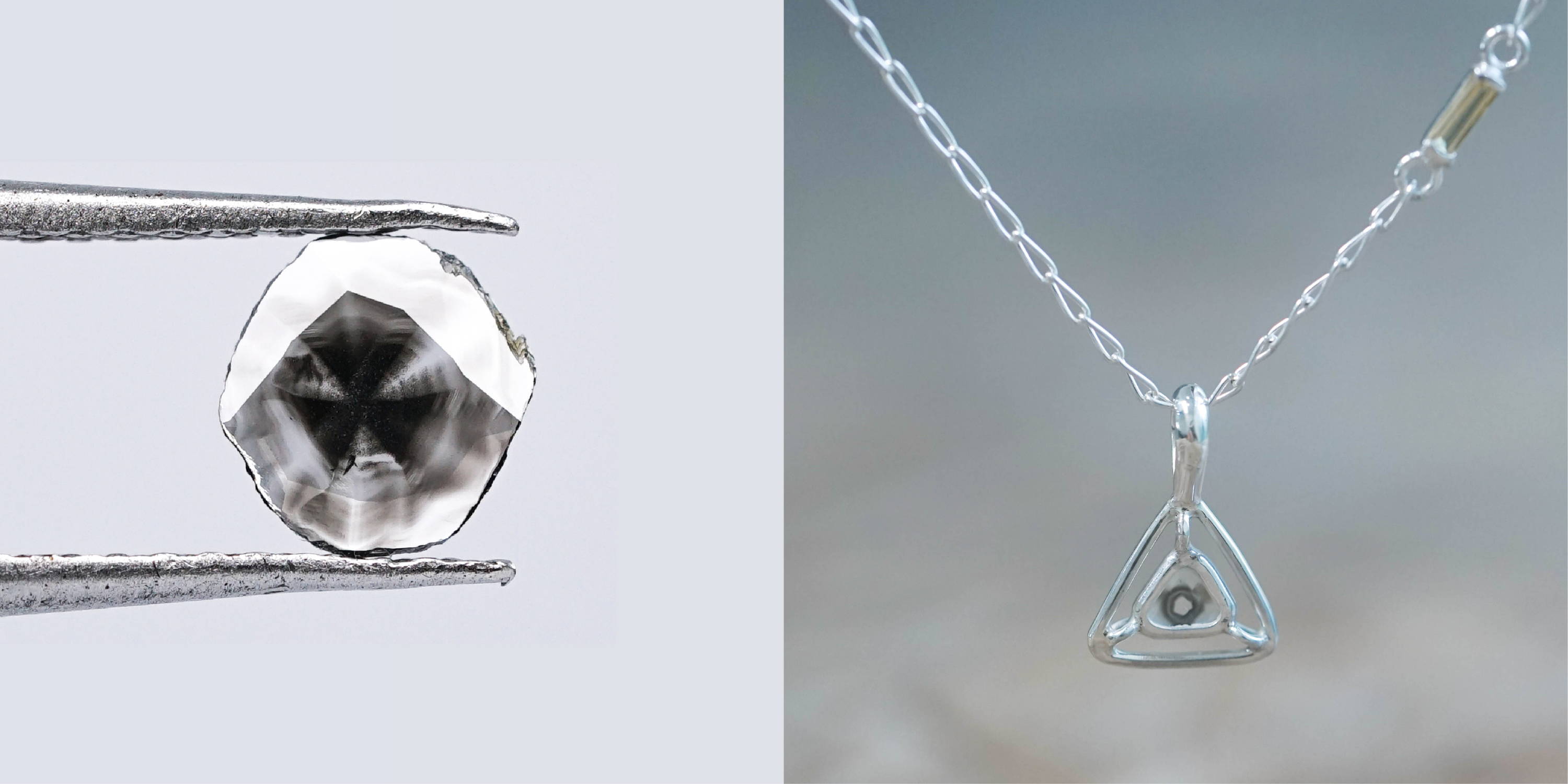
You’ll hear “trapiche diamond” tossed around in gemstone circles, but here’s the catch: true trapiche gems have six spokes. What you’ll find in diamond slices is actually called an asteriated diamond, with three bold spokes, not six. Still, the trade (and most collectors) lump them in under the trapiche name, so the nickname sticks.
What makes them wild:
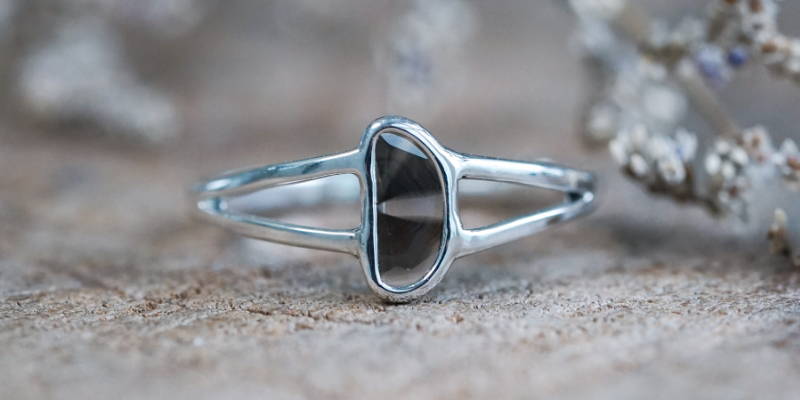
Asteriated (or “trapiche”) diamonds are prized by collectors and gem nerds because nature doesn’t repeat itself. Once overlooked, now fought over. If you spot one in the wild, you know you’re holding a one of a kind diamond.
“Polished diamond” just means a diamond has been cut and faceted so light bounces around inside and out. The process uses special diamond powder and professional tools.
If you’re wondering whether you can polish a diamond at home, short answer: you can clean it, but real polishing needs a lapidary (someone who cuts and shapes gems) with the right equipment.
Diamond slices can be just as valuable as polished diamonds, but they’re valued for different reasons. Classic diamonds climb in price for a perfect cut, colorless body and lack of inclusions. With diamond slices, it’s the other way around. The more striking and unusual the internal patterns or inclusions, the higher the price.
Carat weight will always be lower for a slice compared to a brilliant cut, since slices are much flatter. But what you lose in carats, you gain in size. Diamond slices cover more of your finger or neckline, so you get a lot more visual presence for your money.
Diamond slices aren’t for everyone, and that’s part of their appeal. If you love owning something rare and a bit under the radar, you’re already in the right crowd.
At Gardens of the Sun, we’re always on the lookout for gems that break the rules. Diamond slices hit that sweet spot between rare, honest and interesting. They’re not for everyone, and that’s the point. These aren’t the diamonds for the “just add water” engagement story. They’re for someone who’d rather have a diamond that’s full of history, pattern and one-off character.
We see people choose diamond slice jewelry because it reminds them of something only they can name. Maybe it’s a fingerprint, a tiny galaxy or the first time they saw a geode as a kid. These are the stories that get told when someone asks about your ring.
If you like jewelry with a story, love seeing the inside of things and don’t mind a little extra care, diamond slice jewelry might feel like it was made for you.
If you want something you never have to think about, that can take every bump and scratch, polished diamonds are probably the safer choice. Both are beautiful, just in different ways.
It comes down to what you want from your jewelry.
Both are real diamonds. Both will last when treated right. Only one lets you see a natural cross section of a diamond’s inner world.
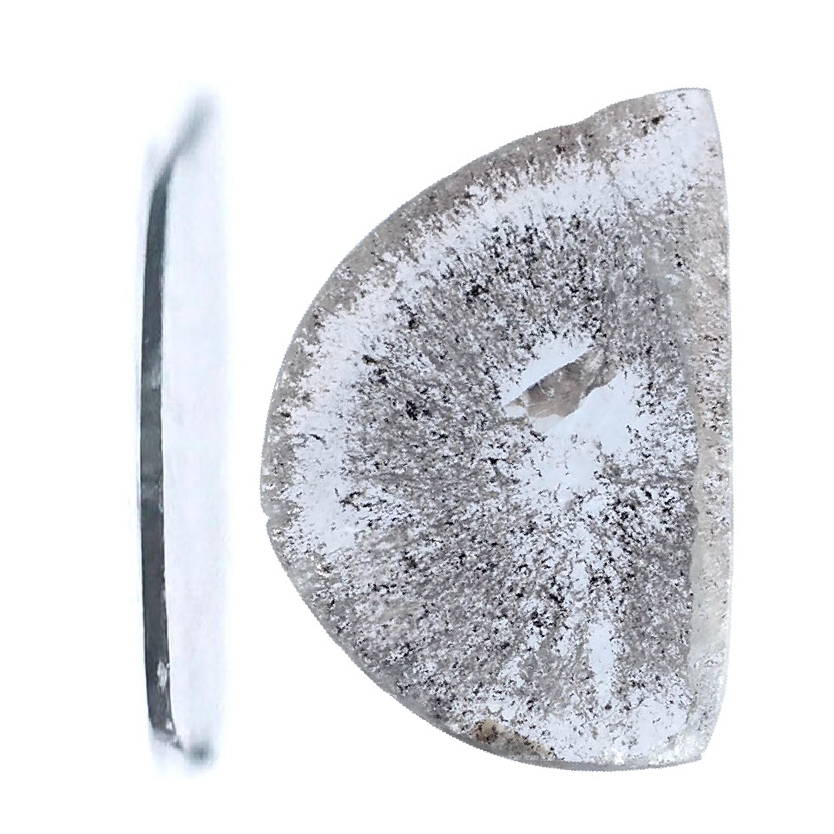
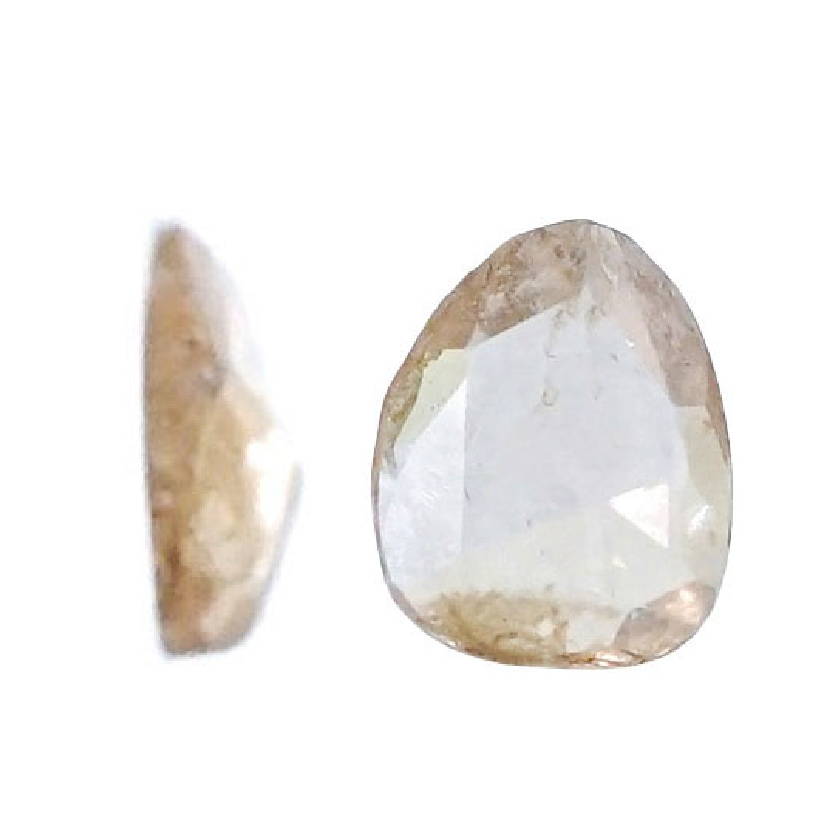
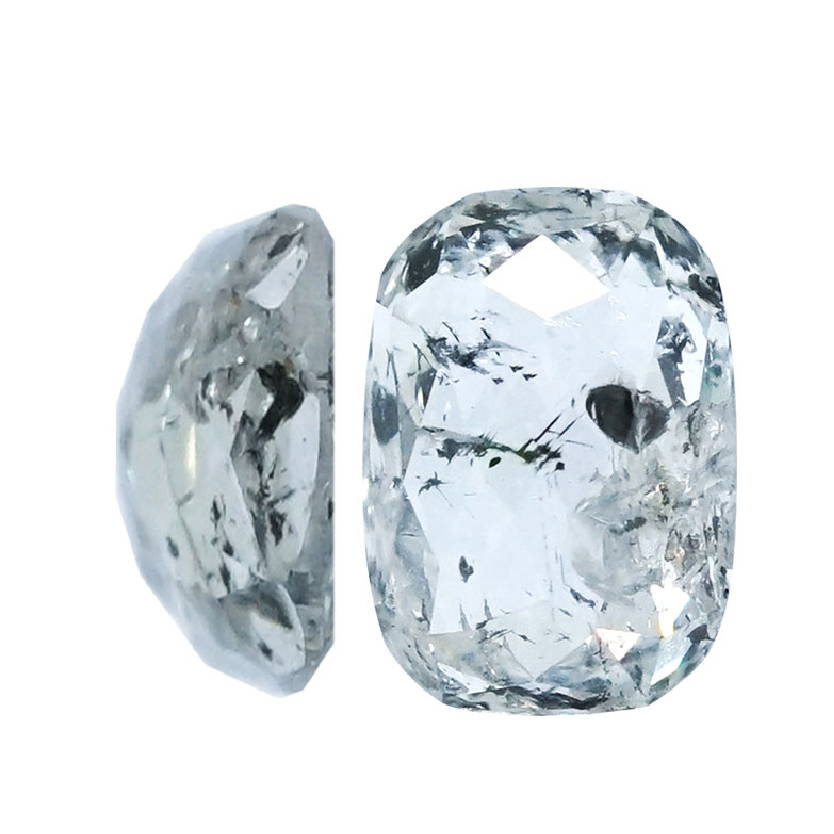
Flat diamonds are most often called diamond slices: thin, cross sectional diamonds that show off the inner patterns of the stone. You might also hear the term polki diamonds, which are traditional, hand cut flat diamonds from India, often a bit thicker than a typical slice. You might also come across rose cut diamonds, which have a flat base and a domed, faceted top (think old world romance).
Diamond Slice
Polki Diamond
Rose cut Diamond
Not always. Diamond slices often give you more “visual real estate” for your money. They cover more of your finger or neckline at a lower carat weight. But price depends on the uniqueness of the slice, the intensity and beauty of inclusions, and how rare the pattern is. The most remarkable slices can command premium prices, while more common slices may cost less than a classic round diamond. If you’re curious about what’s possible, you can see our custom diamond slice ring for inspiration.
Yes, polki diamonds can be valuable, especially if they’re vintage, large or have unique character. Polki is the name for hand cut, natural diamonds that are left flat and unpolished on the back, often with irregular shapes and soft shine. Their value is driven by size, color, clarity and the overall look of the stone. In India, polki jewelry has a long tradition and is highly prized in bridal and antique jewelry.
Yes, polki diamonds can be valuable, especially if they’re vintage, large or have unique character. Polki is the name for hand cut, natural diamonds that are left flat and unpolished on the back, often with irregular shapes and soft shine. Their value is driven by size, color, clarity and the overall look of the stone. In India, polki jewelry has a long tradition and is highly prized in bridal and antique jewelry.
If you’d like to explore a modern take, see our custom polki diamond ring.
A raw diamond is what a diamond looks like before it’s polished. A raw diamond, straight from the earth, looks nothing like the finished gems you see in most jewelry. It’s usually cloudy, rough and can be oddly shaped or covered in a “skin” of rock. Some raw diamonds are translucent, others completely opaque, often with natural inclusions, cracks or a frosty surface. The transformation from raw to polished reveals the hidden clarity, color and light inside.
If you’re into diamond slices, you might also enjoy salt and pepper diamonds and blue diamonds.
Yes. While diamonds are famously hard, diamond slices are thin and can be vulnerable at the edges. A strong knock or a drop onto tile. That’s why we always set diamond slices in a secure bezel setting to help protect the edges and minimize risk.
A raw diamond is an uncut, unpolished stone, straight from the earth, often rough and cloudy, with natural surfaces and inclusions showing. A polished diamond has been shaped, cut and faceted to enhance its clarity, color and light reflection. The process brings out sparkle and creates the familiar look you see in most engagement rings.
Want to compare? Take a look at our custom diamond rings.
“Polished diamond” means a diamond that’s been cut and shaped by a lapidary, then buffed with fine powders until the surfaces are smooth and reflective. This process reveals the stone’s color and brilliance, letting light bounce through the facets and out the top. Polished diamonds include modern round brilliants, ovals, pears, and antique styles like rose cuts.


