Your Cart is Empty

Updated November 2025
Rose gold sits somewhere between a secret and a celebration. It’s the metal that looks like blushing skin, the flesh of a fresh guava or the inside of a seashell, but shinier.
In jewelry, gold is glorious in all its shades. But one as sweet as its name is the romantic rose gold.
But what is rose gold, really? Why does it look so different from yellow gold, and is rose gold real gold or just another pretty story? The answer is all about alchemy. Rose gold is what happens when pure gold mixes with copper.
In this guide, you’ll discover what rose gold is, how rose gold is made, the real meaning behind rose gold’s color and why it’s more than a trend. From the history of rose gold’s invention to the science behind its blush tones, from its symbolic meaning to its role in modern jewelry design, you’ll get everything you need to know before choosing your next rose gold ring.
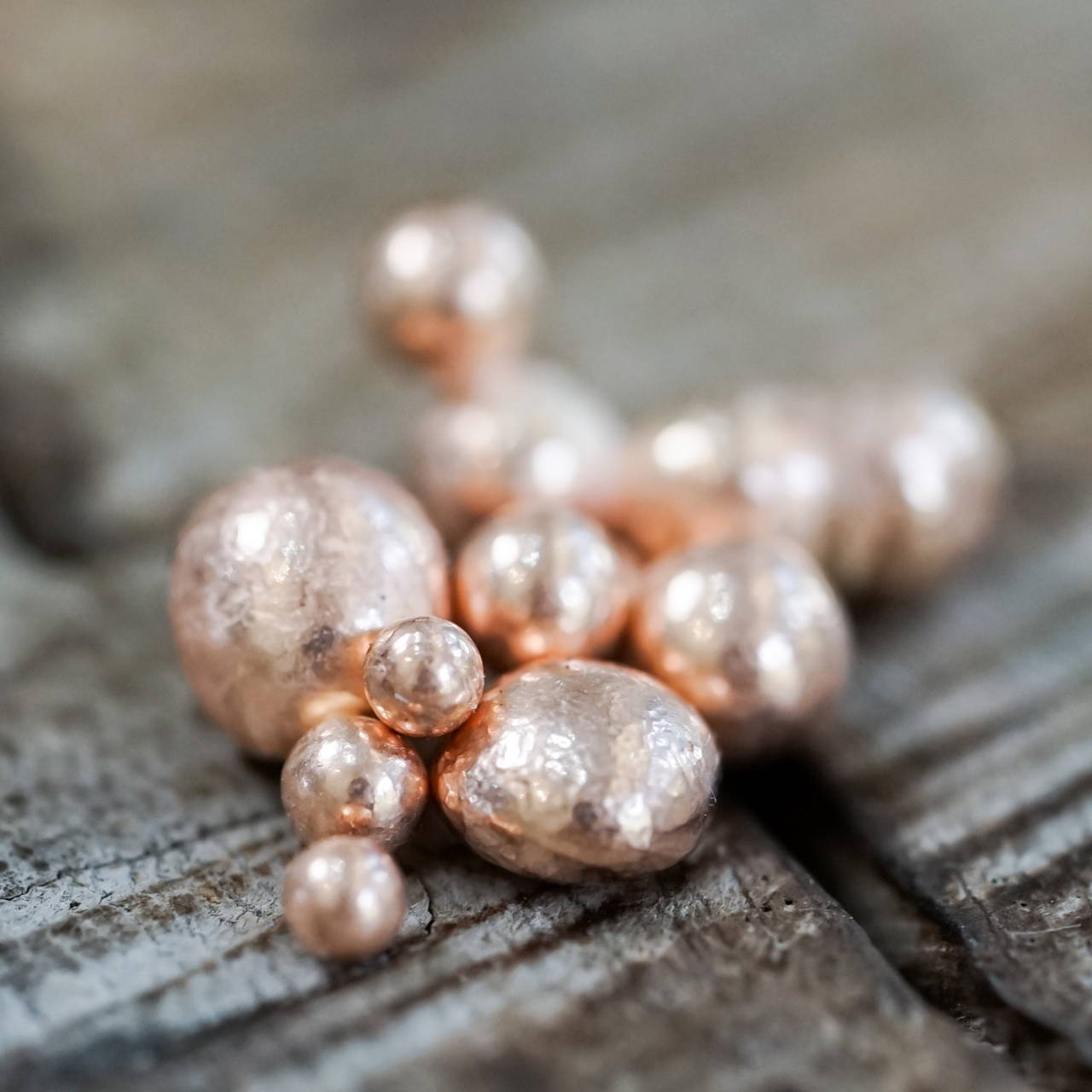
Yes, rose gold is real gold. The pink tone comes from the addition of other metals that alter its color and strength.
Pure gold (24 karat) is naturally bright yellow and too soft for everyday wear, so jewelers blend it with other metals to make it more durable.
Those added metals create what’s called an alloy. In this case, that alloy is what turns yellow gold into rose gold.
At Gardens of the Sun, we use 18 karat ethical gold, which means our rose gold jewelry contains 75% pure gold. The rest is a carefully balanced mix of copper and a touch of silver to get that soft, natural pink tone without the brassy red of lower karat alloys.
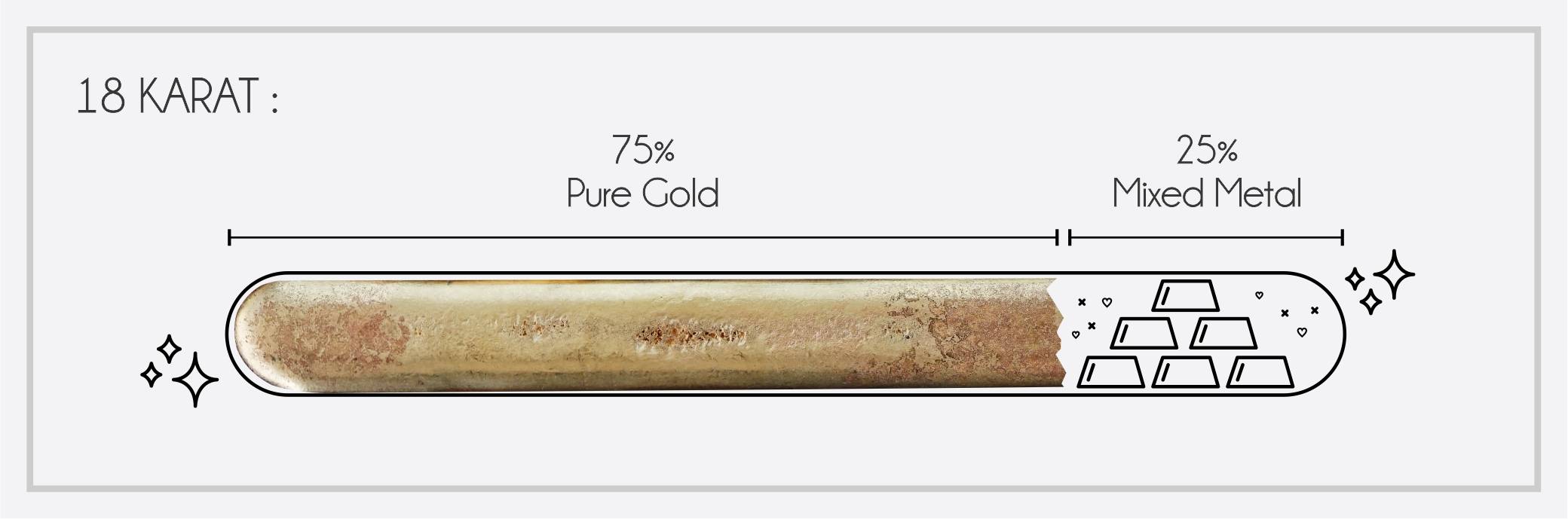
Rose gold is a blend of gold, copper and silver. Think of it like a recipe.
Different jewelers adjust their rose gold alloy, which is why rose gold can look pale in one ring and deep pink in another.
The higher the copper content, the redder the tone. The more silver you add, the lighter and softer the color.
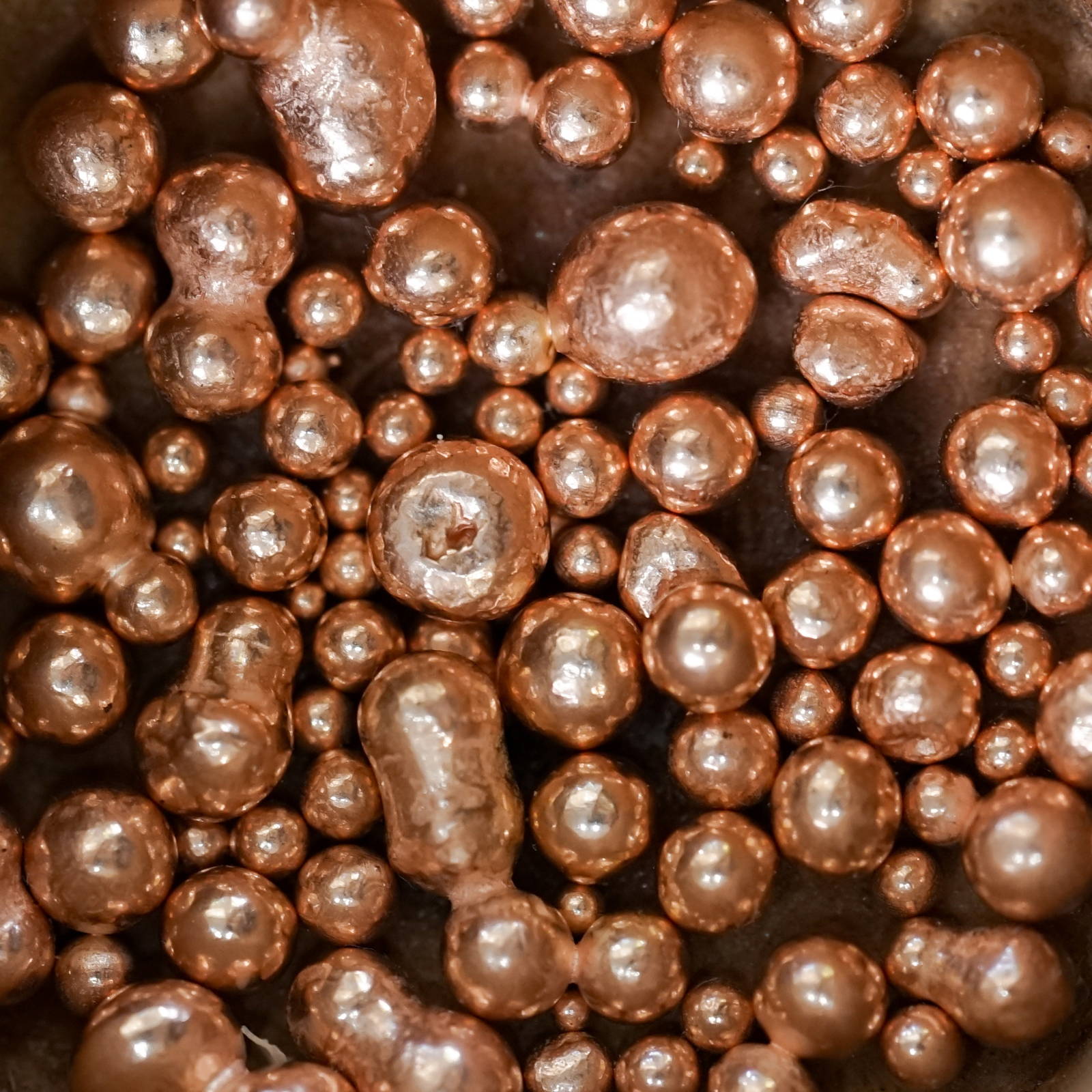
The copper to gold ratio is what defines the shade you see:
So the lower the karat, the redder the rose gold metal. If you’ve ever compared jewelry across stores and thought one looked more copper than gold, now you know why.
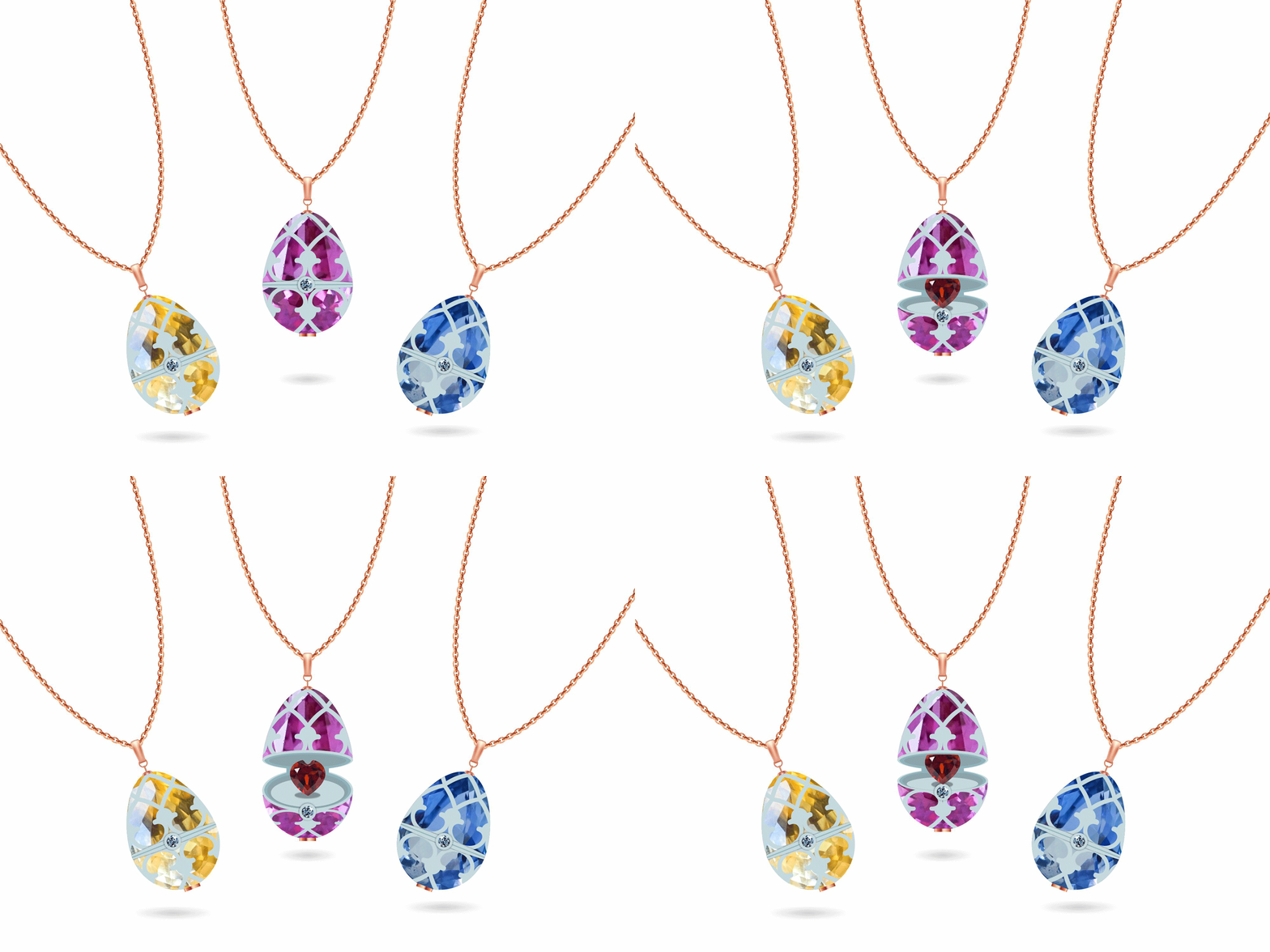
Rose gold has picked up many names as it’s traveled through history. The most famous is “Russian gold”, thanks to Carl Fabergé. In 19th century Russia, Fabergé turned heads and set trends by using a gold and copper alloy in his legendary Fabergé Eggs, ornate creations for the Tsars that gave this blushing metal its first moment in the spotlight. Russian gold became the fashion among aristocrats and dreamers alike, shorthand for anything glamorous, rare and just a little extravagant.
As rose gold drifted across borders and gained popularity beyond Russia, it gathered new names. “Pink gold” when the color ran pale, “red gold” when copper took the lead. Today, “rose gold” is the most common term and Russian gold has become an obsolete term, but its old names are still whispered by collectors and jewelry geeks.
Rose gold’s story didn’t begin with Fabergé. If you dig deep into ancient history, you’ll find Roman coins with a faint rosy tint. However, this wasn’t intentional. Those old coins picked up their blush from accidental copper impurities.
Fast forward to the Victorian era, and rose gold stepped onto the stage with intention. Victorians paired the gentle glow of rose gold with blue sapphires from British-ruled India, creating jewelry that spoke of romance and empire. Rings, lockets and brooches in this pink tinged gold became the jewelry of sweethearts and storytellers, a symbol of love, longing and faraway places.
Rose gold has cycled in and out of fashion since.
1920s: The Art Nouveau and Art Deco eras embraced rose gold’s femininity, and rose gold stood out as an unconventional but chic choice. It appeared in geometric, symmetrical designs paired with diamonds and colorful gemstones.
1940s: As World War II restricted platinum (the favorite metal for fine jewelry) for war efforts and military use, jewelers turned back to gold, and rose gold surged again.
2010s: Rose gold made a comeback. The rise of Instagram, Pinterest and a thirst for unique engagement rings turned rose gold into a modern staple again. From engagement rings to smartphones, rose gold became the color of warmth and modern romance.
Rose gold’s appeal lies in its contradictions. It’s luxurious but approachable. Feminine but strong. Vintage yet modern. That duality makes it timeless: it feels both nostalgic and new, like a photograph with soft light.
At Gardens of the Sun, our 18K rose gold has a muted blush tone, not too pink, not too yellow, so it complements most gemstones without overpowering it.
Rose gold is still popular because it flatters everyone. Rose gold’s color sits between warm and cool tones, making it kind to most skin colors. It brings a gentle glow without shouting for attention. And its romantic hue carries emotional weight: it’s gold, but with heart.
Designers love it because it pairs effortlessly with both diamonds and colored gemstones. Couples love it because it feels unique without straying too far from tradition. And jewelers love it because it’s durable, versatile and easy to work with.
Alright - so you’ve seen where the hype for rose gold came from. But why rose gold? Here’s the skinny on why rose gold tops other metal colors!
Looks flattering on most skin colors.
Since it has a neutral undertone, it looks good on both warm-toned or cool-toned skin colors. However, if you have a lot of red undertones, be cautious since rose gold may accentuate the redness in your skin.
A stronger metal thanks to copper
Gold is soft, and copper can give gold its much needed durability. However, copper on its own will tarnish quickly and can turn green. So if you’re thinking about rose gold vs copper, rose gold is where it’s at.
Looks awesome with warm toned or cool toned gemstones
Some stones just look better in rose gold. No doubt.
A chic and feminine statement.
Rose gold elevates the entire feel of the ring, without adding too much drama.
The color of rose gold lives on a spectrum, from whisper soft blush to bold copper red.
Lighting can change how rose gold appears too. In sunlight it glows, in candlelight it deepens. The tone reflects not just what’s in it, but what’s around it too.
Copper gives rose gold its pink color. On its own, copper is reddish brown. When mixed with gold, it softens the yellow and produces that rosy hue. The silver content finetunes it further, preventing the metal from looking too orange.
Rose gold’s meaning is rooted in romance, love, and passion. People reach for it to mark new beginnings, celebrate individuality, or honor a sense of connection that feels both steady and alive. The metal has long stood for elegance, refinement and a strong sense of self.
Where yellow gold glows and platinum gleams, rose gold has its own mood. One part softness, one part wild card. A rose gold engagement ring signals something different: a break from tradition, a story that refuses to follow a script.
Wearing rose gold is like slipping on a secret. Some see tenderness. Some see rebellion. Some see a color that stands somewhere between old promises and fresh beginnings. The meaning is there for you to shape, every time you put it on.
Rose gold’s price depends on its gold content, not its color. An 18K rose gold ring will cost about the same as an 18K yellow gold ring, because both contain 75% pure gold. Lower karat rose gold (like 14K) costs less since it contains less gold and more copper.
Rose gold doesn’t tarnish in the traditional sense, but over time it can develop a patina. A patina is a slightly darker tone as the copper in the alloy reacts with air and skin.
Some people love this change. It gives the jewelry a vintage, lived in feel and look. If you prefer the fresh pink tone, gentle cleaning with warm soapy water and a soft brush will restore its shine.
Rose gold doesn’t rust, and unlike plated jewelry, it doesn’t wear off, because the color runs through the entire metal.
It’s easy to confuse rose gold with copper, especially since copper gives it color. But they’re very different metals.
Copper is a base metal, beautiful but soft and prone to tarnish, often leaving a green mark on skin.
Rose gold is a noble alloy, it keeps gold’s stability and value while borrowing copper’s warmth.
In short: copper is the spice, gold is the foundation.
Rose gold and yellow gold are equally durable in the same karat and equally valuable, so the choice is aesthetic, not practical. Your choice is mostly about taste and habit. Yellow gold carries a sense of tradition and pairs well with deeper or warmer skin tones. Rose gold brings in a softer mood and sits comfortably on cool or neutral undertones. Both metals hold up well for daily wear, as long as the karat is the same.
When clients ask for advice on choosing a yellow gold vs rose gold engagement ring, we usually recommend starting with the jewelry you already wear. If your jewelry box is full of yellow gold and that’s what you wear most days, your engagement ring will fit right in if you stick with yellow gold. For custom rings, you might want to pick your gemstone or diamond first, then choose the metal that makes the stone pop.
Lately, the rose gold trend has slowed down. People are still drawn to it, but yellow gold and white gold hold their ground year after year. Trends move fast, but you’re the one wearing the ring. Go with the color you grab without thinking, the one that feels right on your skin and tells your story best. That’s the gold that belongs with you, trend or no trend.
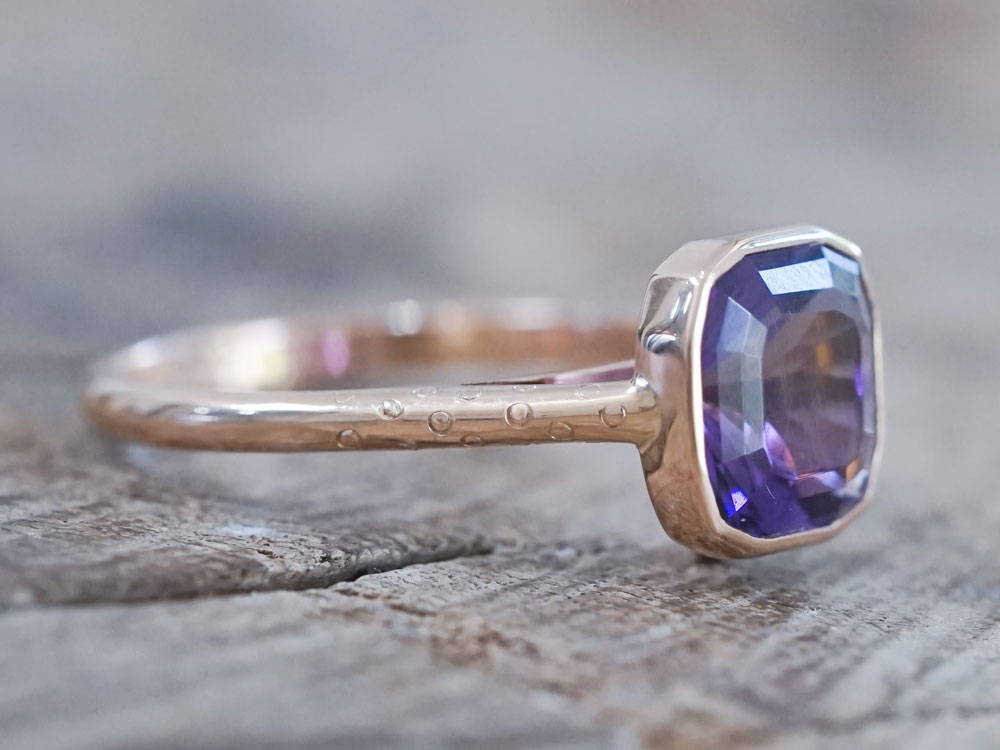
Rose gold’s tenderness makes it a favorite for promise rings. The hue feels like the color of first love: warm, hopeful and full of meaning. Add a birthstone or engraving, and you’ve got a keepsake that grows with the relationship. We'd say yes to a rose gold promise ring!
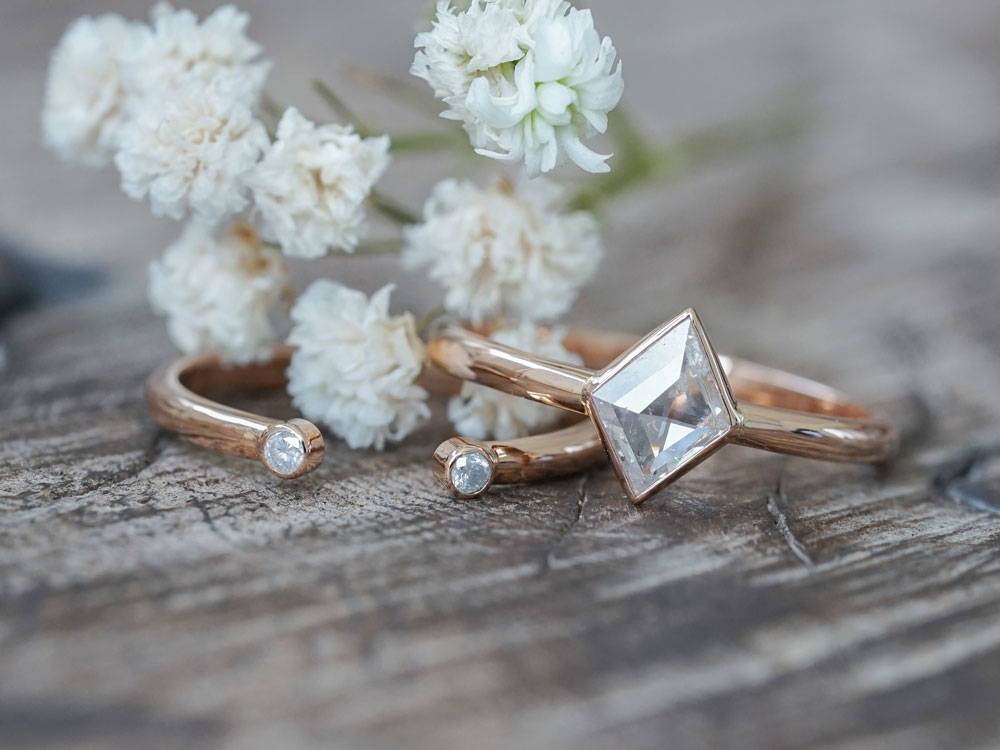
A rose gold engagement ring stands out without trying. It turns a simple setting into something soulful, and makes diamonds and colored gemstones appear warmer.
Since rose gold is alloyed with copper, it’s slightly harder than yellow gold, making it fantastic for everyday wear. If you or your partner gravitates toward subtle color, vintage details or romantic designs, rose gold might just be the one.
Rose gold elevates the look of a plain and minimalist engagement, making it an ideal choice for modern brides. If you think rose gold blends nicely with the color and undertone of your skin, we’d say go for it! Since rose gold is a durable metal, it makes a great engagement ring for everyday wear.
That being said, rose gold goes in and out of fashion for a reason. If you love rose gold but aren’t sure you’ll continue wearing rose gold, or if you’re getting your girlfriend an engagement ring but she normally wears silver or yellow gold, a rose gold engagement ring isn’t for you. Instead, consider getting a rose gold statement ring or cocktail ring.
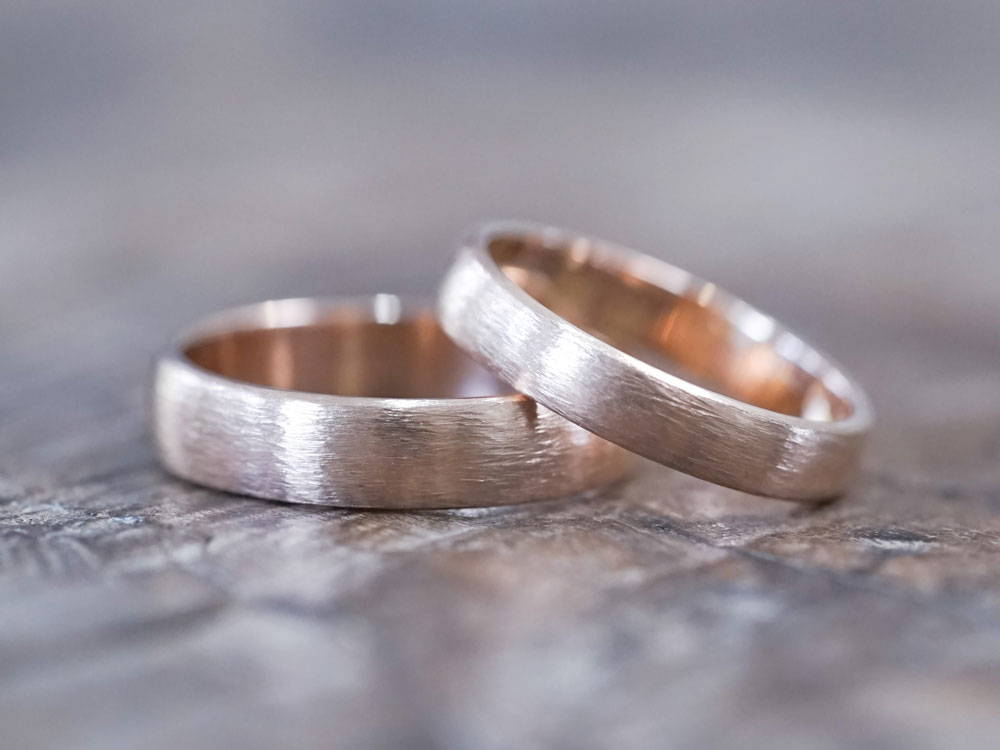
For a wedding band, rose gold adds sentiment without flash. Its gentle tone makes it wearable every day and its strength ensures it lasts through decades of hand holding, work and daily life. If you usually wear mixed metals, rose gold bridges them all. It’s the middle ground that goes with everything.
Think about this:
Your wedding band isn’t a fashion piece. So choose a metal color which works best for you on any given day, and any mood. Ideally, the metal of your wedding band matches the jewelry you like to wear on a day to day basis.
aka which gemstones go well with rose gold?
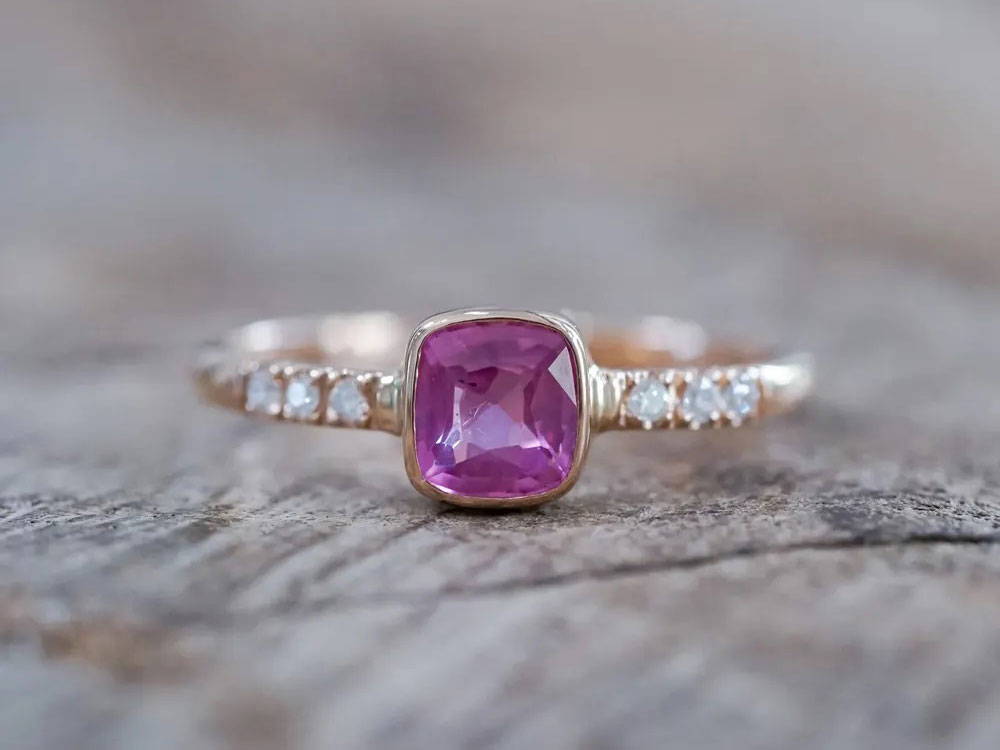
Rose gold brings out the dusky blushes of warmer toned gemstones. It creates harmony and a sense of softness and romance. Rose gold morganite rings are a favorite in our studio. Various shades of garnet, mauve spinel, plum colored or pink sapphire, rubellite (a vibrant pink shade of tourmaline) or even kunzite… Rose gold jewelry is luxurious in the way your first morning stretch after a good night sleep feels luxurious.
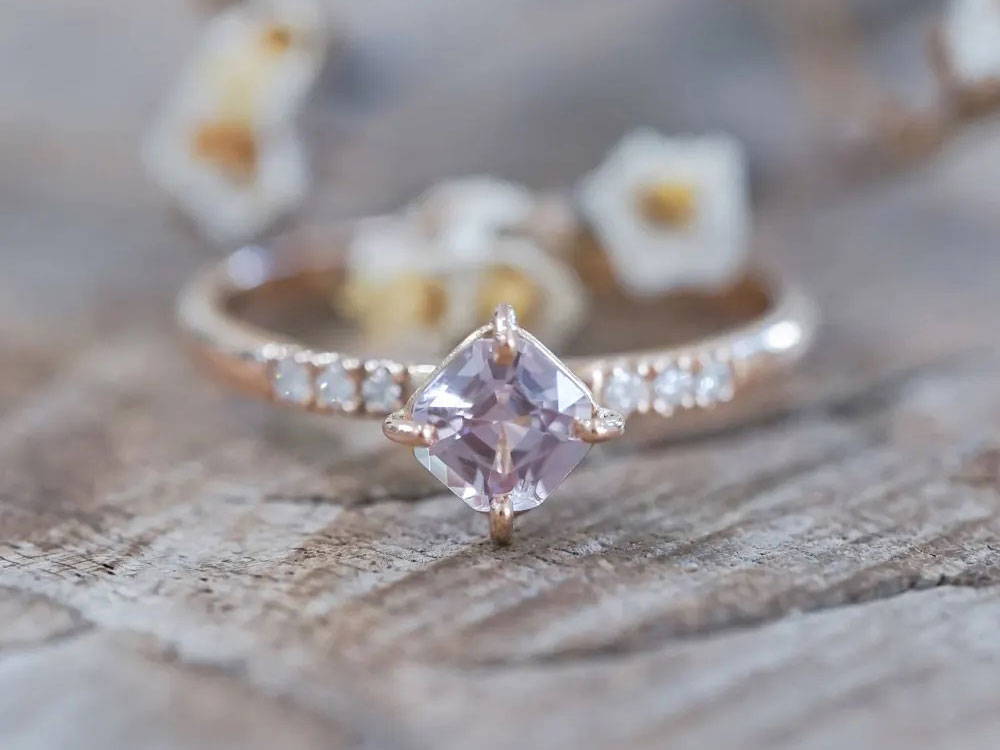
Classic colors like white or gray can look stunning on rose gold. Diamonds, white sapphire, topaz, zircon, platinum colored spinel, moonstones and moody salt and pepper diamonds look striking against rose gold. The pink hue enhances the sparkle of white stones and softens the mood of gray ones. Together they create jewelry that feels classic and modern in the same breath.
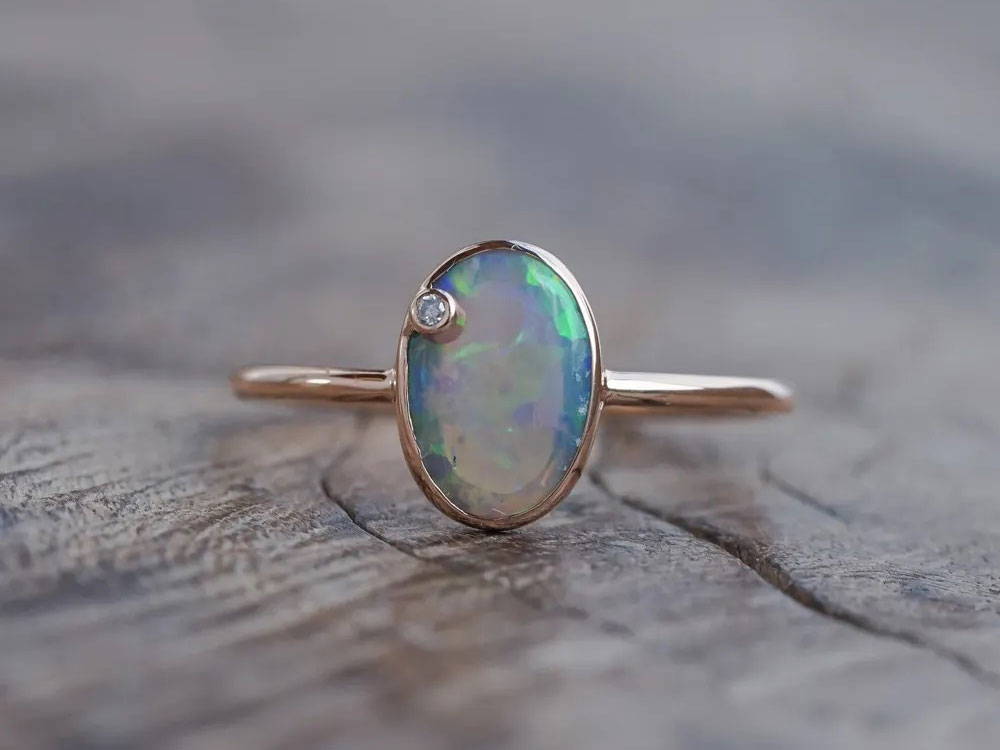
One of my favorite rose gold combinations involves a cool, lavender hued spinel, accentuated with sparkling white diamonds. If you’re looking to play around with color tones, consider a custom opal and diamond ring in rose gold. Opals have always been a popular pairing with rose gold as it can be both cool and warm in color. Crystal opals and opals with predominantly blue color work best with rose gold.
Blue and green gems add contrast, highlighting rose gold’s warmth. Options like aquamarine, teal sapphire, green garnet or green tourmaline bring out the metal’s golden undertones, creating an ethereal balance between fire and water.
Pro design tip:
Go with your gut instinct. When you’re designing a gold ring, the most important thing is to love the elements that go into it. From stone choice, to metal colors, to any additional design elements you want to add to your ring, at the end of the day the most important thing is that you love it.
And remember we’ve got your back! Feel free to ask our team for a mockup of your preferred metal with the gemstone or diamond of your choice.
Don’t stop here